

Best Mirrors & Accessories for Profiled & Pro-Fit UTV Cages
When upgrading UTV platforms that use profiled or Pro-Fit cages such as Polaris, Can-Am, CF Moto Gen 2, or Segway UT series models, clamp geometry determines whether mirrors and accessories remain stable under vibration. Unlike round roll bars, D-shaped cages require direct-fit clamps engineered to mechanically engage the channel without adapters.

What Is a Profiled or Pro-Fit UTV Cage?

A profiled or Pro-Fit cage uses:
• A flat rear wall
• Defined outer edges
• A shallow channel profile
When a round-style mounting system is adapted to a profiled cage, the round engagement surface is typically replaced with a profiled adapter plate or wrap bracket. That adapter then becomes the interface between the accessory and the cage.
The issue is not the number of parts.
The issue is surface conformity.
If the adapter does not precisely match the cage geometry, load is transferred through:
• Reduced contact area
• Concentrated edge pressure
• Friction-dependent preload
Under vibration, micro-movement begins at the interface. Over time, this can lead to drift.
Direct-fit profiled clamps are engineered to mechanically key into the cage geometry itself rather than forcing a round design to conform to a flat-backed structure.
For a deeper breakdown of this concept, see our
→ UTV Mirror Engineering Guide
→ Form Closure vs Friction Closure article
Best Mirrors for Profiled & Pro-Fit Cages (Non-Cabbed Models)
Engineering Note: The direct-fit mirror systems detailed below are engineered specifically for open-air, uncabbed machines. If you are running a fully enclosed cab, you must use our cab-specific mirror geometry to clear your doors and windshields. However, our profiled accessory mounts (for whips, fuel, and extinguishers) are compatible with both cabbed and uncabbed models.
Modern non-cabbed profiled cage platforms include:
• Polaris Ranger (all non-XD models)
• Polaris General
• Can-Am Commander
• Maverick Trail & Maverick Sport
• CF Moto ZForce Gen 2
• CF Moto UForce
• Segway UT6, UT10, UT10X
These machines operate without full cab enclosures. As a result, mirrors experience:
• Higher aerodynamic drag
• Direct trail branch contact
• Continuous washboard vibration
In these conditions, clamp geometry determines long-term stability for mirrors and mounted accessories.
A direct-fit profiled clamp that keys into the cage reduces reliance on friction alone and improves alignment retention under sustained vibration.
If you are running a cabbed Ranger XP 1000, XD 1500, Defender Limited, or Xpedition, see our dedicated guide:
→ Best Mirrors for Cabbed UTVs
For detailed fitment across all machines:
→ UTV Mirror Fitment Guide
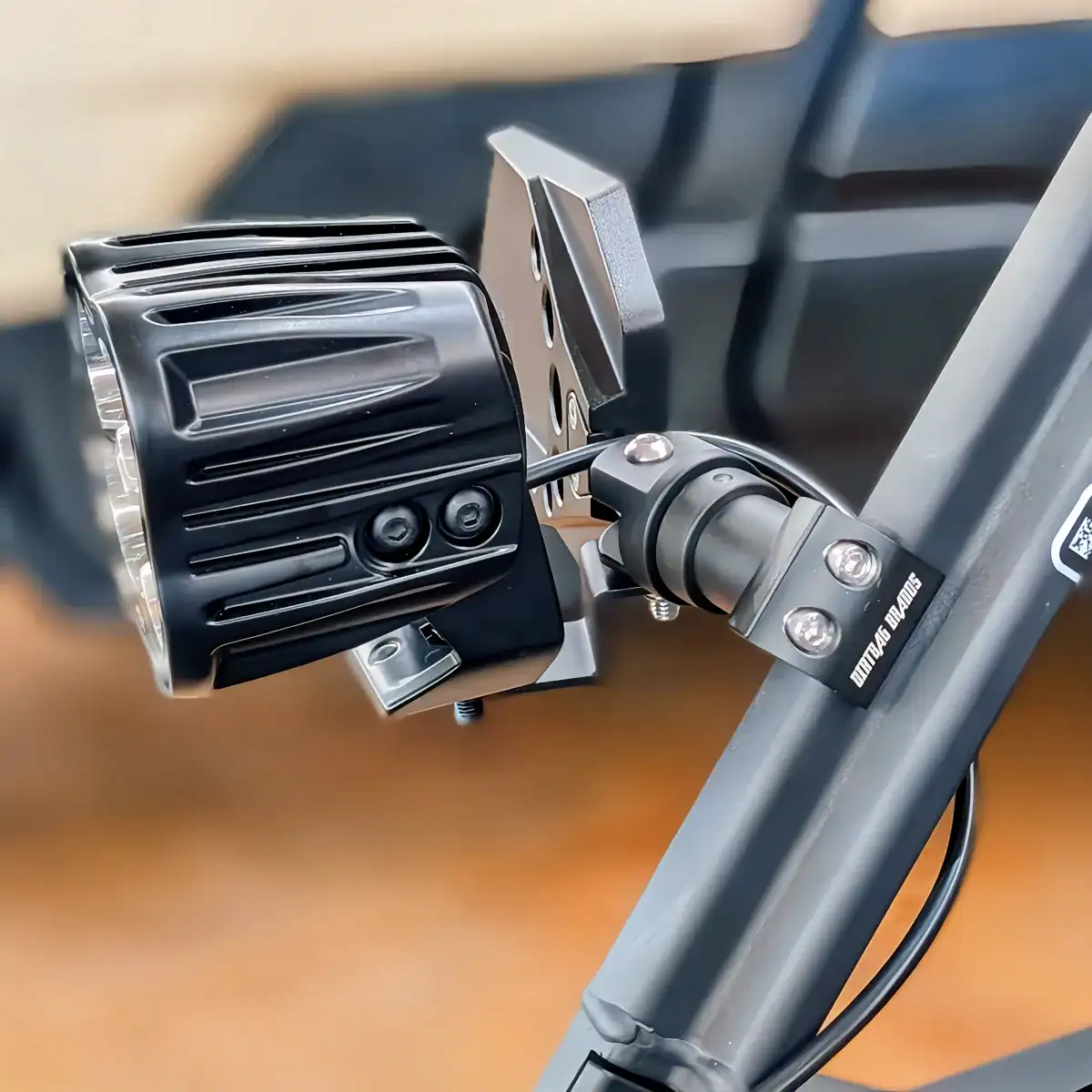

Profiled Cage Accessories Beyond Mirrors


Mirrors are only the beginning. Crucially, while side mirrors must navigate the physical interference of full doors and windshields, our direct-fit billet accessory mounts work on most cabbed AND uncabbed models. Because these clamps key directly into the rear or upper channel profiles, they provide a rock-solid mounting point without interfering with factory HVAC cab seals.
Profiled cages require direct-fit billet mounts for heavier accessories, including:
Fire extinguisher brackets
Whip mounts
Rotopax fuel and water mounts
Explore platform-specific accessory pages:
→ Can-Am Defender/ Commander Maverick Sport & Trail Accessories
→ Polaris Ranger Accessories
→ Polaris Xpedition Accessories
→ CF Moto ZForce Accessories
→ CF Moto UForce Accessories
→ Segway UT Accessories
Platform Breakdown
Polaris Ranger (Non-XD) & General – Pro-Fit Cage
Polaris Pro-Fit cages use a D-shaped channel profile that differs significantly from traditional round roll bars. Non-XD Ranger and General models benefit from direct-fit profiled clamps that engage the cage geometry without shims or wrap brackets. For uncabbed machines, vibration resistance becomes critical under open-air riding conditions.

Can-Am Commander & Maverick Trail / Sport – Profiled Cage

Commander and Maverick Trail/Sport platforms use a profiled cage design that requires geometry-specific clamps. Adapter plates designed for round clamps often reduce surface contact area. Direct-fit profiled mounting systems improve alignment stability and reduce long-term drift under vibration.
CF Moto ZForce Gen 2
Second-generation ZForce models transitioned to profiled cage geometry. These machines are often used for trail riding and recreational utility, where sustained vibration can loosen friction-based mounts. A direct-fit clamp improves long-term stability without requiring additional mounting hardware.

CF Moto UForce

UForce models serve work and ranch environments where accessories such as fuel packs and fire extinguishers are common. Because these accessories add leverage, clamp engagement and load distribution become especially important on profiled cage platforms.
Segway UT Series (UT6, UT10, UT10X)
Segway UT models use a profiled channel cage design similar in concept to Polaris and Can-Am systems. Accessory options in this segment remain limited compared to larger brands. Direct-fit billet clamps provide a stable mounting solution without relying on universal adapter brackets.

Why Clamp Geometry Matters More Than Brand Name
Manufacturers compete on horsepower, suspension travel, and trim packages. However, accessory stability comes down to load path and clamp design.
A Polaris Ranger, Can-Am Commander, CF Moto UForce, and Segway UT may differ in price and branding. Yet when those machines use profiled or Pro-Fit cages, the mounting challenge remains the same.
Vibration does not care about decals.
Aerodynamic drag does not care about trim level.
Leverage does not care about MSRP.
If a clamp relies only on surface friction against a flat-backed channel, preload loss over time can lead to movement. By contrast, a clamp engineered to mechanically engage the cage profile distributes load through geometry rather than bolt tension alone.
In other words, the cage shape determines the mounting strategy.
Choosing the right clamp architecture ensures mirrors and accessories remain aligned under real-world use, regardless of the badge on the hood.
Not all profiled cage clamps are engineered equally.
Some mounting systems rely on a single pivot bolt to compress against the cage. While simple, a single-bolt design concentrates clamping force at one point. Under vibration, force distribution can become uneven, which may increase the likelihood of micro-movement over time.
Other systems use narrow steel strap-style brackets to wrap the channel. Steel provides strength, but thin stamped components can introduce flex under load. In addition, exposed steel surfaces may require coating protection to resist corrosion in wet or salted environments.
A wider billet clamp distributes force across a larger surface area. When the clamp face matches the cage geometry and uses dual-bolt compression, clamping load spreads more evenly. This reduces localized stress and improves long-term retention under vibration.
Clamp architecture determines how load travels into the cage.
Bolt count, surface width, and material stiffness all influence stability.
Brand reputation does not change basic mechanical principles.
Engineered for the Cage You Actually Have
Modern UTV platforms have moved to profiled and Pro-Fit cages for structural reasons. Accessory mounting should match that geometry.
A profiled cage is not a round tube with corners. It has defined engagement surfaces and load-bearing edges.
Over time, vibration and leverage expose the difference between friction-dependent clamps and geometry-driven engagement.
Match the clamp to the cage.
Then ride without adjustment drift.
That is why direct-fit profiled clamps engineered with geometric form-closure are designed to physically engage the D-shaped channel rather than relying on surface friction alone.
For full compatibility across all machines and mounting systems, visit our UTV Mirror Fitment Guide.
Frequently Asked Questions
A Pro-Fit or profiled UTV cage uses a D-shaped or channel-style roll bar instead of a traditional round tube. This design includes flat engagement surfaces and defined edges, which improve roof and cab integration but require clamps engineered specifically for that geometry.
Round tube mirrors can sometimes be adapted using shim plates or strap-style brackets. However, because profiled cages use flat-backed channels rather than cylindrical tubes, round clamps may rely more heavily on friction and reduced contact area. Direct-fit profiled clamps are engineered to match the cage geometry precisely, reducing reliance on friction alone and improving long-term stability.
Common models with profiled or Pro-Fit cages include Polaris Ranger (non-XD models), Polaris General, Can-Am Commander, Maverick Trail and Maverick Sport, CF Moto ZForce Gen 2, CF Moto UForce, and Segway UT series machines. Always verify your specific model year and trim before purchasing accessories.
Billet clamps are typically machined from solid aluminum, which does not rust. Steel strap-style brackets can provide strength, but unless properly coated, exposed steel surfaces may be more susceptible to corrosion over time in wet, muddy, or salted environments. In addition to material choice, clamp width, bolt configuration, and surface engagement all influence long-term stability on profiled cages.
It depends on the accessory. For side mirrors, cabbed machines (such as the Polaris Ranger XD 1500, Can-Am Defender Limited, or Polaris Xpedition) require specific horizontal mirror geometry to clear door frames and A-pillars. You can find those in our dedicated Cabbed UTV Mirror Guide. However, for mounting fire extinguishers, Rotopax, or whip flags, our direct-fit profiled accessory mounts are designed to key into the cage without interfering with most factory cab enclosures and windshield seals.
Disclaimer
Compatibility references and cage descriptions are based on publicly available manufacturer specifications and industry-standard terminology at the time of publication. Fitment may vary by model year, trim level, or aftermarket modification.
Always verify your specific machine configuration before purchasing accessories. Product comparisons discussed in this article are intended for educational purposes and reflect general clamp architecture differences rather than performance guarantees of any specific brand.
Follow Dirtbag Brands in Google
Add Dirtbag Brands as a Preferred Source for more UTV fitment guides, product testing, powersports news, and industry coverage.

Comments are closed