

Best Mirrors for Cabbed UTVs: Ranger XP 1000, XD 1500, Defender HD9/10/11 & Xpedition XP/ADV
When choosing the best mirrors for cabbed UTV builds such as the Polaris Ranger XP 1000, Ranger XD 1500 NorthStar, Can-Am Defender HD9, HD10, HD11 Limited, or Polaris Xpedition XP and ADV models, field of view and long-term stability matter more than mirror height alone. Cab enclosures, door frames, and A-pillar placement change mirror geometry. As a result, the mounting structure must manage leverage, vibration, and sustained aerodynamic load instead of relying only on clamp tension.

Trucker Mirrors Are Not Always the Best for Cabbed UTVs
Trucker-style mirrors became popular in the UTV market for a simple reason: they match the tow rig. Many owners like the visual connection between their truck and their machine.
In addition, vertical trucker mirrors work well in orchards and narrow agricultural rows. When equipment must pass through tight lanes, vertical visibility can help monitor fence lines or crop edges.
However, most Ranger XP 1000, XD 1500, Defender HD11, and Xpedition XP owners operate in open terrain, mixed trails, ranch fields, or hunting grounds. In those environments, horizontal field efficiency often matters more than mirror height.
A taller mirror does not automatically mean a wider or clearer rearward view.
Cabbed UTV Geometry Changes Field of View on Ranger, Defender, and Xpedition
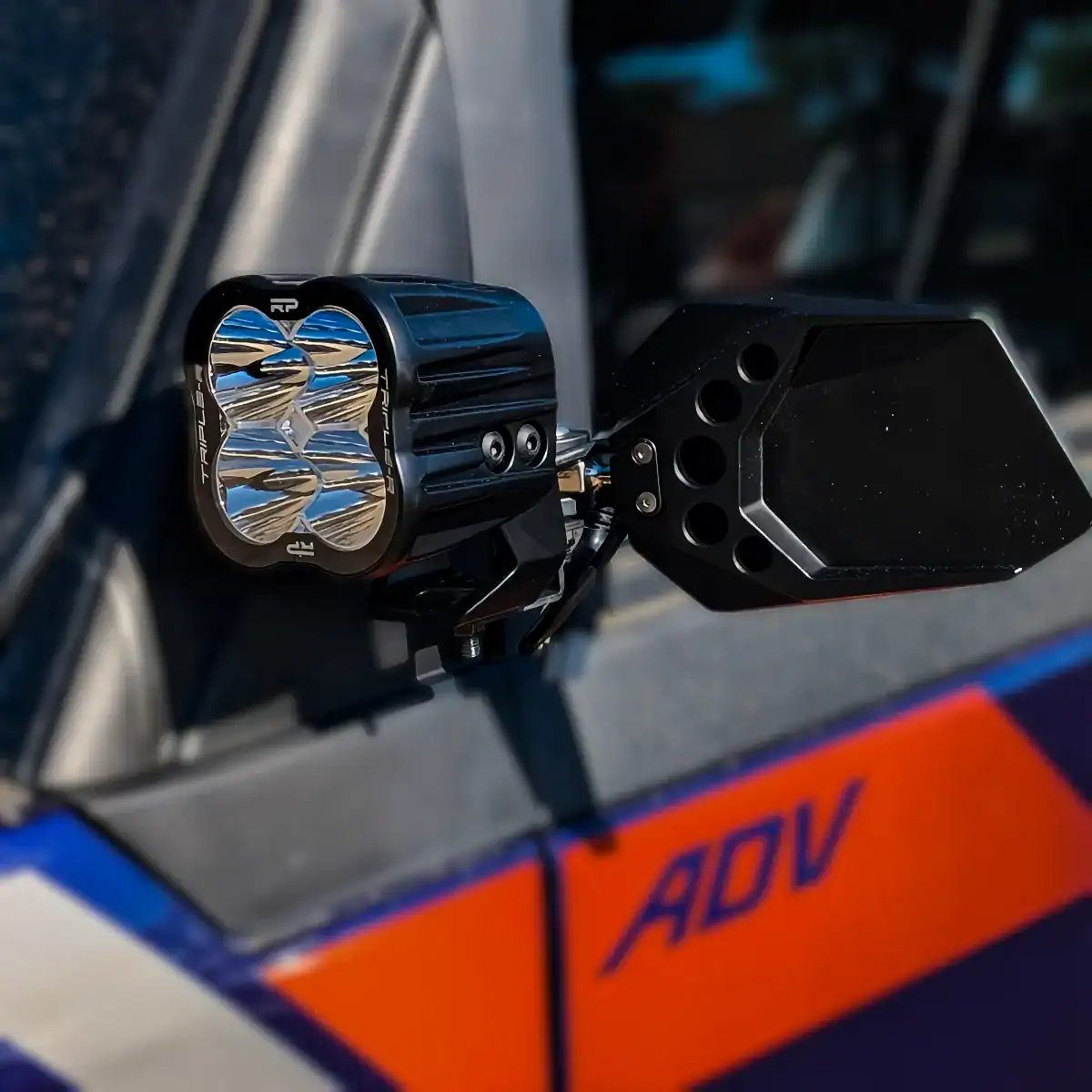
Cabbed UTVs mount mirrors either to the door frame or to the A-pillar sail mount, as seen on Polaris Xpedition XP and ADV trims. Importantly, the Xpedition sail mount does not interfere with door operation. The mirror sits forward of the hinge arc, so the door opens normally.
However, both door and A-pillar mounting positions sit inward compared to the machine’s outer body panels. Meanwhile, the rear hips flare outward on Ranger XP 1000, XD 1500, Defender HD models, and Xpedition XP and ADV platforms.
Because of that geometry, the mirror must extend farther outward to see around the body.
In other words, the mounting plane sits narrow, but the machine sits wide.
As a result, horizontal extension becomes critical. A mirror that sticks out farther often clears the rear fender line more effectively than a tall, narrow vertical mirror.
However, extension increases leverage.
The farther the mirror sits from the cage, the more torque it applies to the clamp under vibration and aerodynamic drag. Therefore, geometry and structural engineering must work together on cabbed machines.
Why Ranger XP 1000, XD 1500, Defender, and Xpedition Mirrors Sag
Mirror sag rarely comes from a single impact. Instead, it develops gradually.
As mirrors extend outward to clear door frames and rear hips, leverage increases. Torque equals force multiplied by distance. Therefore, every inch of outward extension multiplies stress at the clamp and adjustment joint.
At the same time, vibration cycles slowly reduce bolt preload. When preload drops, static friction drops with it. Once friction falls below the torque applied to the mirror, drift begins.
All OEM mirrors offered for Polaris Ranger XP 1000 and XD 1500 NorthStar trims, Can-Am Defender HD9, HD10, and HD11 models, and Polaris Xpedition XP and ADV cab variants use injection-molded nylon housings with friction-based hinge pivots. Nylon offers good impact resistance and cost control. However, nylon remains a flexible polymer. Under sustained aerodynamic load and vibration, the hinge interface can flex slightly under sustained aerodynamic load and vibration.
In addition, prolonged UV exposure gradually alters polymer surface characteristics, which can lead to visible fading and reduced surface depth over extended outdoor use.
Polaris OEM cab mirrors typically retail near $180. Can-Am OEM mirrors commonly retail around $235. For a modest additional investment, billet aluminum mirror systems can provide increased structural rigidity, wider horizontal field of view, and integrated pod light mounting.
To understand how preload loss and force-closure retention affect long-term stability, see our UTV Mirror Engineering Guide. For a deeper breakdown of mechanical lock versus friction-based retention, learn more about Form Closure versus Friction Closure.
Lighting, Load, and Early Morning Use

Hunters and ranchers rarely operate only at noon. In many regions, machines roll out before sunrise and return after dark. As a result, auxiliary lighting becomes practical rather than cosmetic.
However, adding pod lights changes the structural demand on a mirror system.
When a light mounts beyond the primary adjustment joint, the added weight increases torque at that joint. Even a small pod light creates additional bending force when positioned several inches from the pivot. Over time, that extra load compounds vibration and accelerates drift in friction-based systems.
By contrast, mounting solutions that place lighting near a structural hinge axis reduce concentrated load at the adjustment interface. Separating structural load from fine-angle adjustment helps maintain mirror alignment even when lighting adds mass.
In short, geometry, retention, and lighting must be evaluated together on cabbed UTV builds.
Best Mirrors for Cabbed UTV: Platform Breakdown
Polaris Ranger XP 1000 & XD 1500 NorthStar
Ranger XP 1000 and Ranger XD 1500 NorthStar models combine cab enclosures with higher travel speeds and heavier machine weight. As a result, mirror systems experience sustained vibration and aerodynamic load.
When evaluating Ranger XP 1000 side mirrors or Ranger XD 1500 mirrors, outward reach and clamp stability both matter. In addition, many Ranger NorthStar builds include heaters, windshields, and full doors, which push the mirror farther from the cage centerline.
Hunters and ranchers often operate before sunrise and after sunset. Because of that, integrated pod light mounting becomes practical rather than cosmetic. Proper load path separation helps maintain mirror adjustment even when auxiliary lighting adds weight.
Check out our Polaris Ranger XP 1000 & XD 1500 Accessories here.


Can-Am Defender HD9, HD10 & HD11 Limited
Defender HD9, HD10, and HD11 Limited models use Pro-Fit cages and frequently serve work and ranch environments. Therefore, mirrors must balance durability with daily usability.
Defender HD11 side mirrors often sit close to door frames, which increases the importance of horizontal visibility. At the same time, agricultural and livestock use places mirrors under constant vibration.
Because OEM mirrors use nylon hinge construction, long-term stability depends entirely on friction preload. Billet systems increase stiffness and maintain consistent alignment over time.
Read more about our Top 5 Defender Accessories here.
Read more about our accessories Top 5 Can-Am Defender Accessories here
Polaris Xpedition XP & ADV (NorthStar Models)
Polaris Xpedition XP and ADV trims frequently run longer distances between trail systems. Consequently, sustained vibration becomes a larger factor than short burst riding.
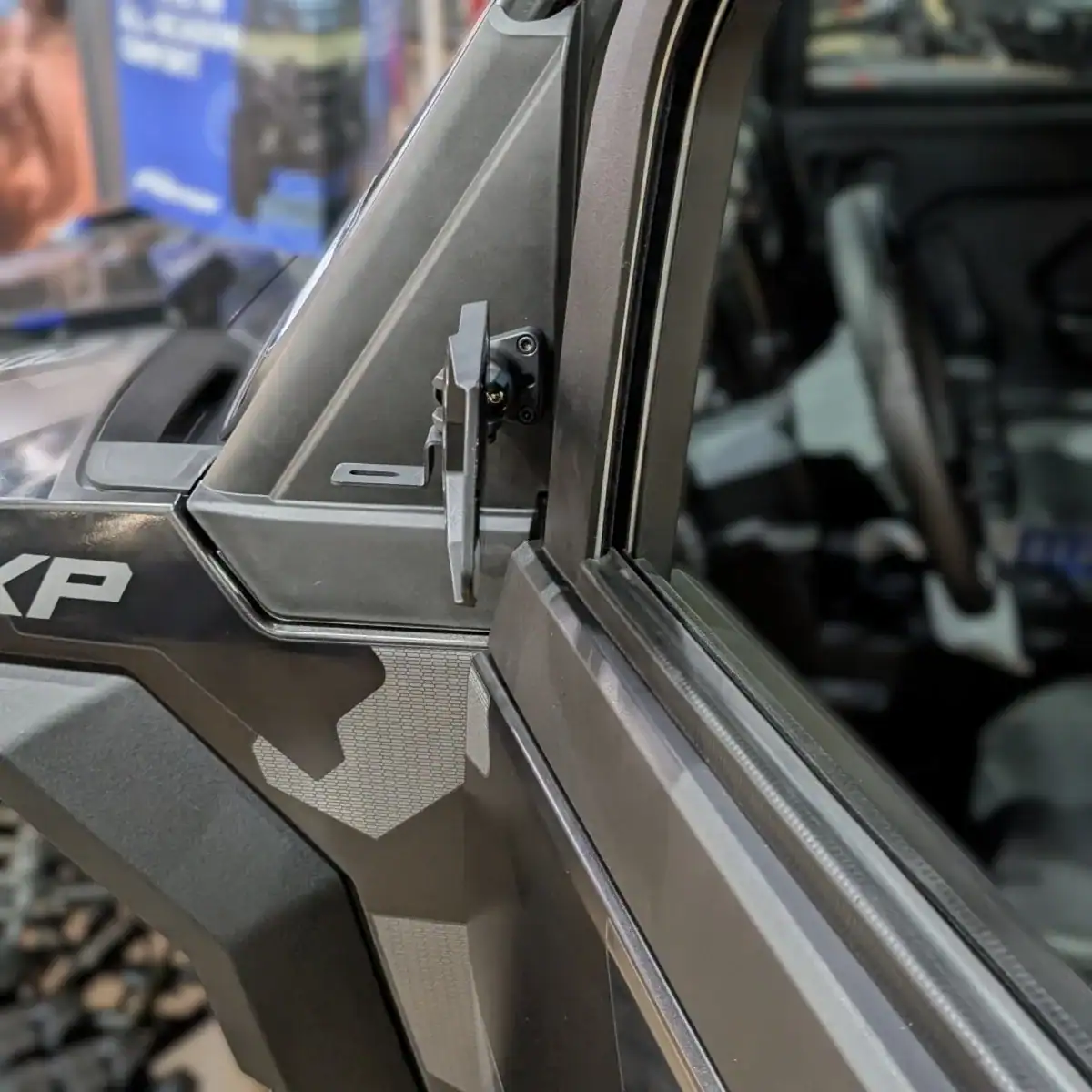
Xpedition mirrors mount at the A-pillar sail position, forward of the door hinge arc. This placement avoids door interference while still requiring outward extension to clear the rear body flare.
When evaluating Polaris Xpedition mirrors, riders should consider both field of view and structural retention. Overland builds often add lighting, communication gear, and wind deflectors, which increase total system load.
Read more about our accessories for the Polaris Xpedition here
Click here to see Polaris Xpedition XP & ADV Accessories here

Geometry and Structural Engineering Work Together
The best mirrors for cabbed UTV builds do not rely on height alone. Instead, they combine:
• Proper outward geometry to clear rear hips
• Stable clamp architecture
• Retention that manages leverage
• Material stiffness appropriate for sustained load
While vertical truck-style mirrors can serve specific agricultural use cases, most Ranger XP 1000, XD 1500, Defender HD models, and Xpedition XP and ADV builds benefit from horizontal field efficiency paired with structural stability.
Cabbed machines create leverage. Therefore, mirror systems must be engineered to handle it.
On modern cabbed UTV platforms, mirror height alone does not solve the visibility problem. Geometry and structural engineering do.
If you have another model and want to see what mirrors we offer, check our, Check our UTV FItment Guide.
Frequently Asked Questions
Trucker-style mirrors can work well in narrow agricultural environments. However, on cabbed UTVs such as the Ranger XP 1000, XD 1500, Defender HD11, and Xpedition XP, horizontal field efficiency and structural stability often matter more than vertical mirror height.
OEM mirrors typically use nylon housings and friction-based hinges. Over time, vibration and thermal cycling reduce clamp tension. When grip drops below applied torque, slow drift begins.
Yes. Polaris Ranger, XD 1500, and Xpedition OEM mirrors and Can-Am Defender OEM mirrors commonly use injection-molded nylon construction with friction-based hinge pivots.
Nylon is commonly used in high-volume production because it reduces manufacturing cost and provides impact flexibility. Billet aluminum allows for mechanical lock, also known as form closure, which reduces reliance on friction alone. By sharing load through geometry rather than only clamp tension, mirror alignment remains more consistent under vibration and sustained use.
Yes. When lighting mounts beyond the primary adjustment joint, added weight increases torque at that joint. Systems that separate structural load from fine adjustment can maintain alignment more consistently.
Follow Dirtbag Brands in Google
Add Dirtbag Brands as a Preferred Source for more UTV fitment guides, product testing, powersports news, and industry coverage.

Comments are closed