

Why Polaris Ranger Mirrors Vibrate and How Proper Geometry Fixes It
Polaris Ranger mirror vibration usually starts long before a mirror actually feels loose. The problem often comes down to mounting geometry, clamp design, leverage, and how different Ranger platforms transfer vibration through the cage or door structure. Polaris Ranger mirror vibration becomes more noticeable over time because the Ranger lineup uses several completely different mounting systems, including round roll bars, Pro-Fit cages, and cab-mounted door structures on NorthStar and XD 1500 models. As a result, mirror stability depends less on mirror size alone and far more on how the mounting system manages load, vibration cycles, and long-term clamp pressure.
Looking for complete Polaris Ranger mirror fitment by cab type and cage style? See our full Ranger mirror fitment guide here.
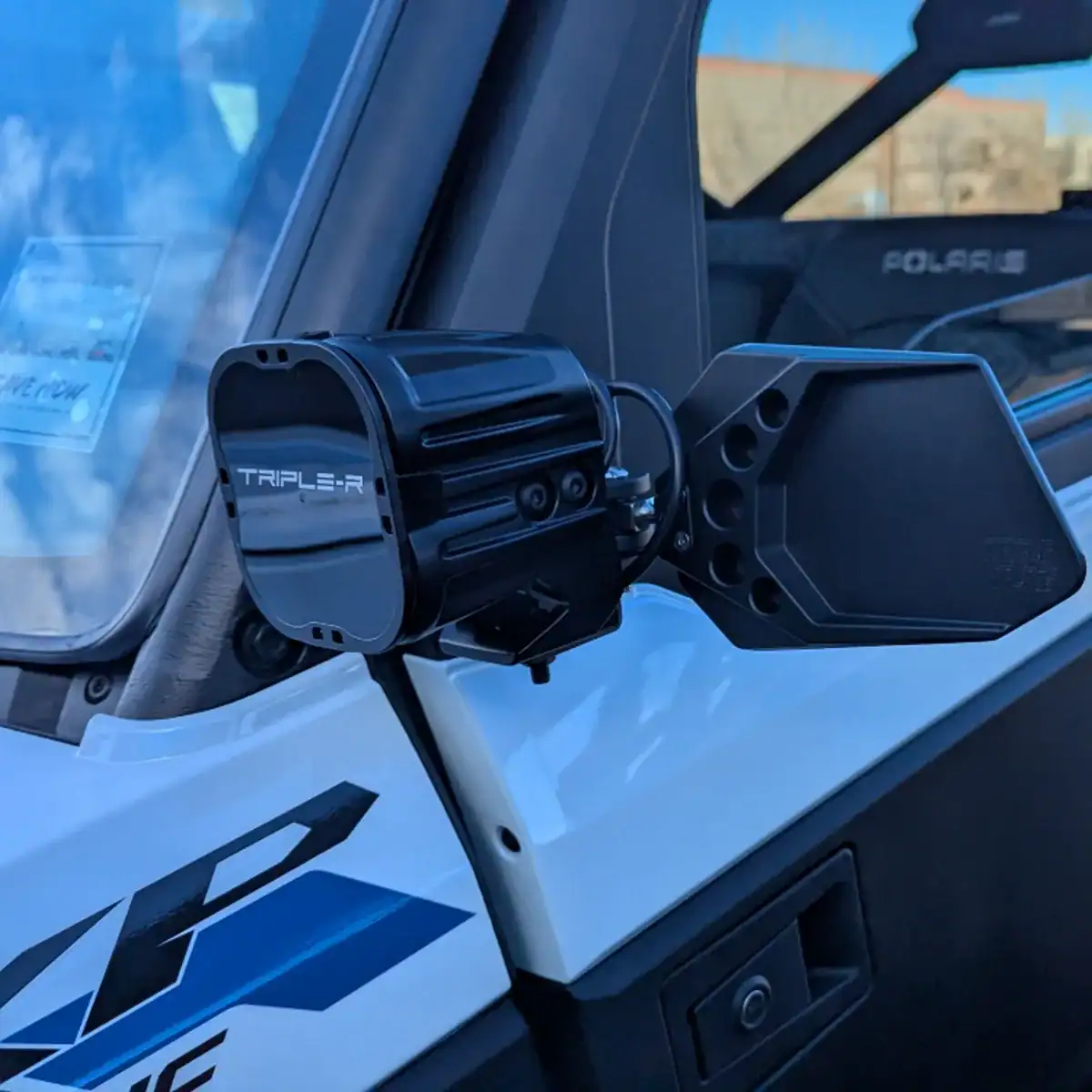
Polaris Ranger Side Mirror Fitment by Model
| Machine | Cage Type | Mirror Mount Location |
|---|---|---|
| Ranger 500 | Round roll bar | Roll bar clamp mirror |
| Ranger 570 (non-cab) | Pro-Fit cage | A-pillar mount |
| Ranger XP 1000 (non-cab) | Pro-Fit cage | A-pillar mount |
| Ranger XD 1500 (non-cab) | Pro-Fit cage | A-pillar mount |
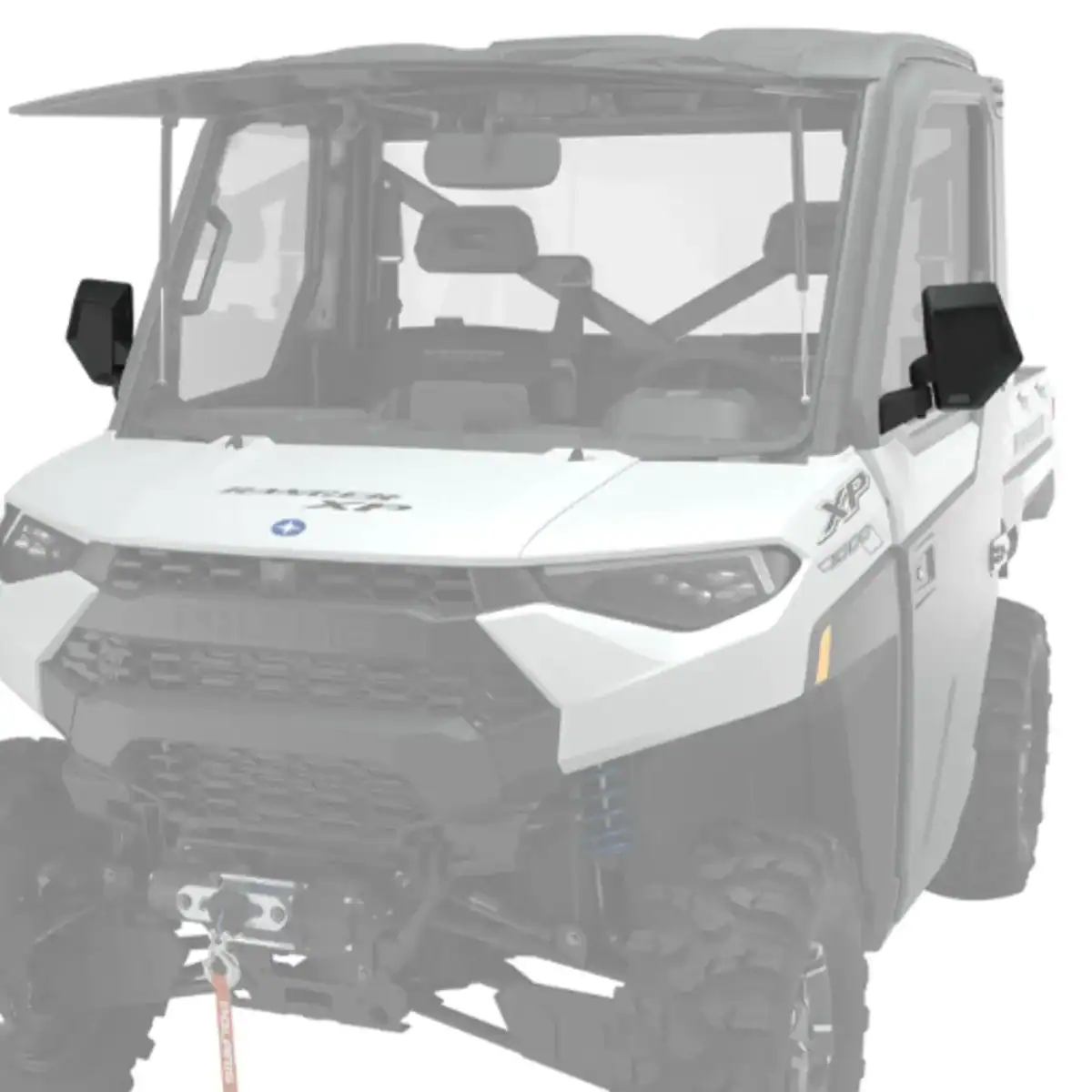
| Ranger XP 1000 NorthStar | Cab door mount | Door-mounted mirror |
| Ranger XD 1500 NorthStar | Cab door mount | Door-mounted mirror |
Different Ranger platforms require different mirror solutions because the mounting structure changes across the lineup. Round roll bar Rangers clamp directly to tubular cages, while Pro-Fit Rangers such as the Ranger 570 and XP 1000 mount mirrors at the A-pillar. Meanwhile, cabbed Rangers mount mirrors directly to the door structure in order to maintain door clearance and sealing.
Automotive Style vs Trucker Style Mirrors on Cabbed Rangers
Cabbed Ranger models present a field of view challenge that open cage machines do not face. The door frame, window opening, and cab structure all constrain how much rearward visibility a rider can achieve from the driver’s seat. Mirror shape and glass curvature therefore matter more on cabbed platforms than on open machines where the rider can physically turn and look.
Trucker-style mirrors use a tall rectangular form factor borrowed from commercial vehicle applications. That shape maximizes vertical field of view for lane monitoring on straight roads but produces a narrow horizontal sweep that limits peripheral awareness in off-road and tight trail environments. On a cabbed Ranger navigating switchbacks, backing into a trailer position, or monitoring obstacles alongside the machine, horizontal field of view is more operationally valuable than vertical height.
Automotive-style mirrors use a wider horizontal format with slight convex curvature that expands the field of view across the horizontal plane. That curvature trades some distance accuracy for a wider sweep of the environment — the same tradeoff automotive engineers have optimized for decades on passenger vehicles operating in dynamic environments with obstacles at varying distances and angles.
On a cabbed Ranger specifically, the window opening and door geometry already constrain the mirror’s vertical position. A tall trucker mirror does not recover usable vertical field of view that the cab structure has already eliminated. An automotive-style mirror with proper convex curvature fills the available horizontal viewing window more effectively and provides the peripheral sweep that trail and work environments demand.
The image above demonstrates this field of view advantage in a real-world cabbed Ranger environment. The automotive-style billet mirror captures both the immediate foreground and the background environment with usable clarity across the full horizontal sweep of the glass.

Why Different Polaris Ranger Platforms Require Different Mounting Geometry

Polaris Rangers fall into three mirror mounting categories. First, some Rangers such as the 2026 Ranger 500 use traditional round roll bars. Next, most modern Rangers use Polaris’ profiled Pro-Fit cage, which requires a completely different clamp architecture. Finally, cabbed models such as the Ranger XP 1000 NorthStar and Ranger XD 1500 mount mirrors directly to the door frame.
Because each configuration uses different mounting geometry, mirror solutions must match the structure of the machine.
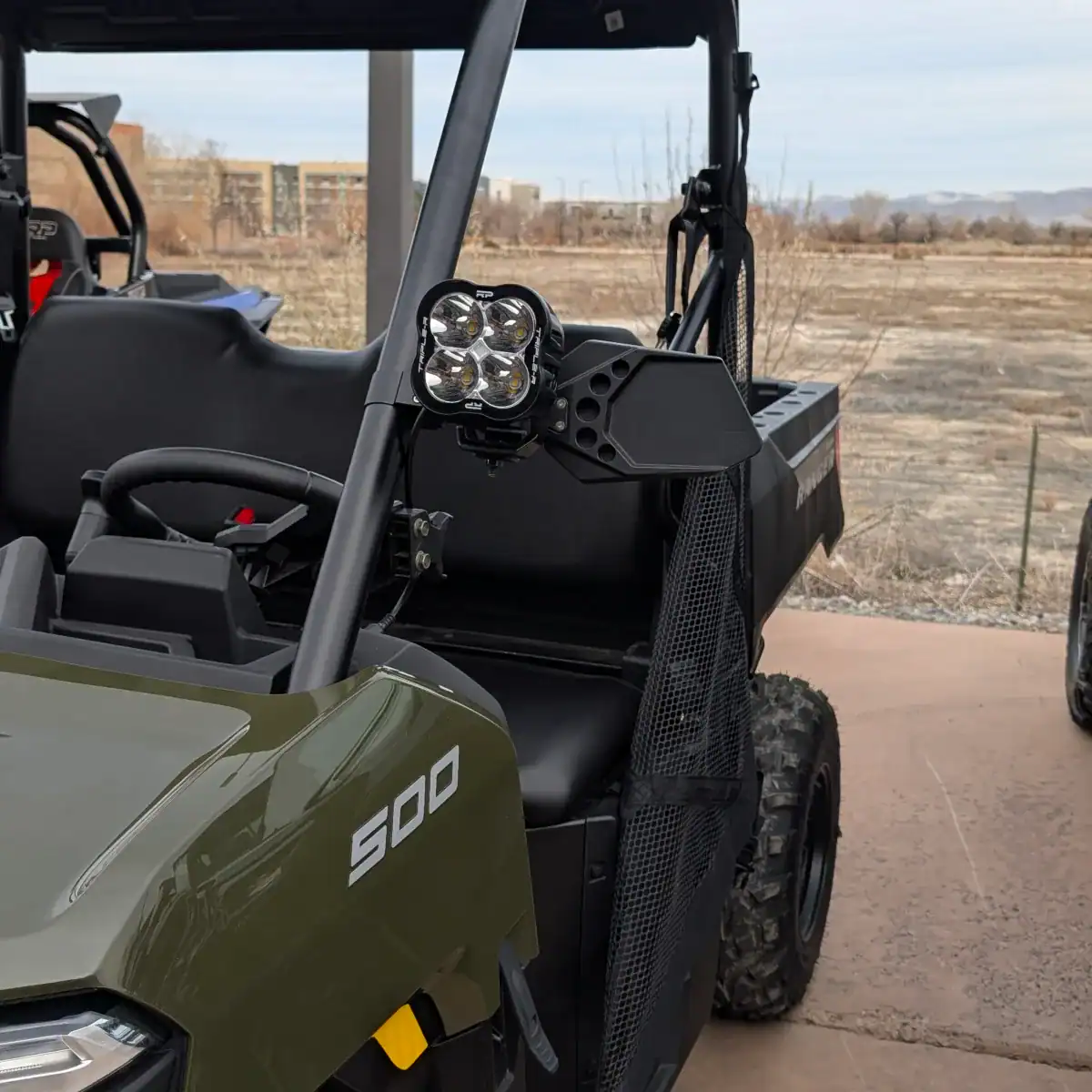
Mirrors for Polaris Ranger 500 and Round Roll Bar Rangers
The Polaris Ranger 500 returned to a round roll bar configuration rather than the Pro-Fit cage used on larger Ranger models. As a result, mirrors designed for Pro-Fit tubing will not fit correctly on these machines. Our Mirror-01 is the solution for that.
Round roll bar Rangers require a clamp that matches the diameter of the cage rather than a profiled interface. When the clamp geometry matches the cage, the mirror shares load across the contact surface instead of relying entirely on bolt friction.
For a deeper breakdown of how different Ranger cages affect accessory fitment, see our UTV mirror fitment guide.
You can also read our full article covering the new 2026 Polaris Ranger 500 here.
Mirrors for Polaris Ranger Pro-Fit Cages (XP 1000, 900, 570 & XD 1500 Non-Cab)
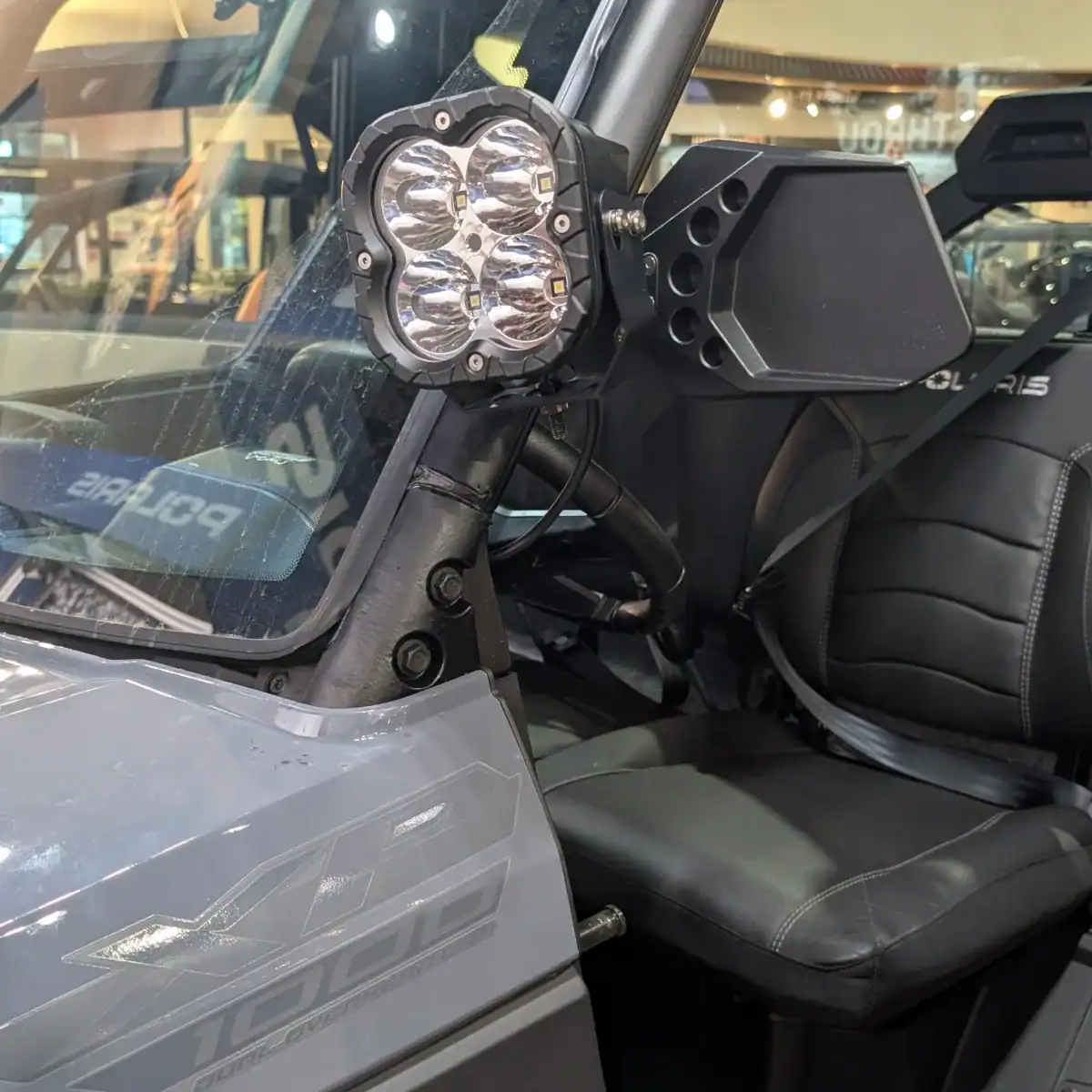
Most Polaris Ranger models use the Pro-Fit roll cage, which features a profiled, non-round shape. Because of that design, universal round clamps often rely on rubber shims to fill the gap between the clamp and the cage. Profile-matched mirror systems were developed specifically to address this issue that are incorporated within our Mirror-02 for example.
However, rubber interfaces introduce compression and rebound during vibration cycles. Over time, that movement gradually reduces clamp preload. Once preload drops, friction decreases. As a result, mirror drift begins.
Profile-matched clamps eliminate that problem because the clamp matches the cage profile directly.
Learn more about Pro-Fit accessories compatibility we offer.
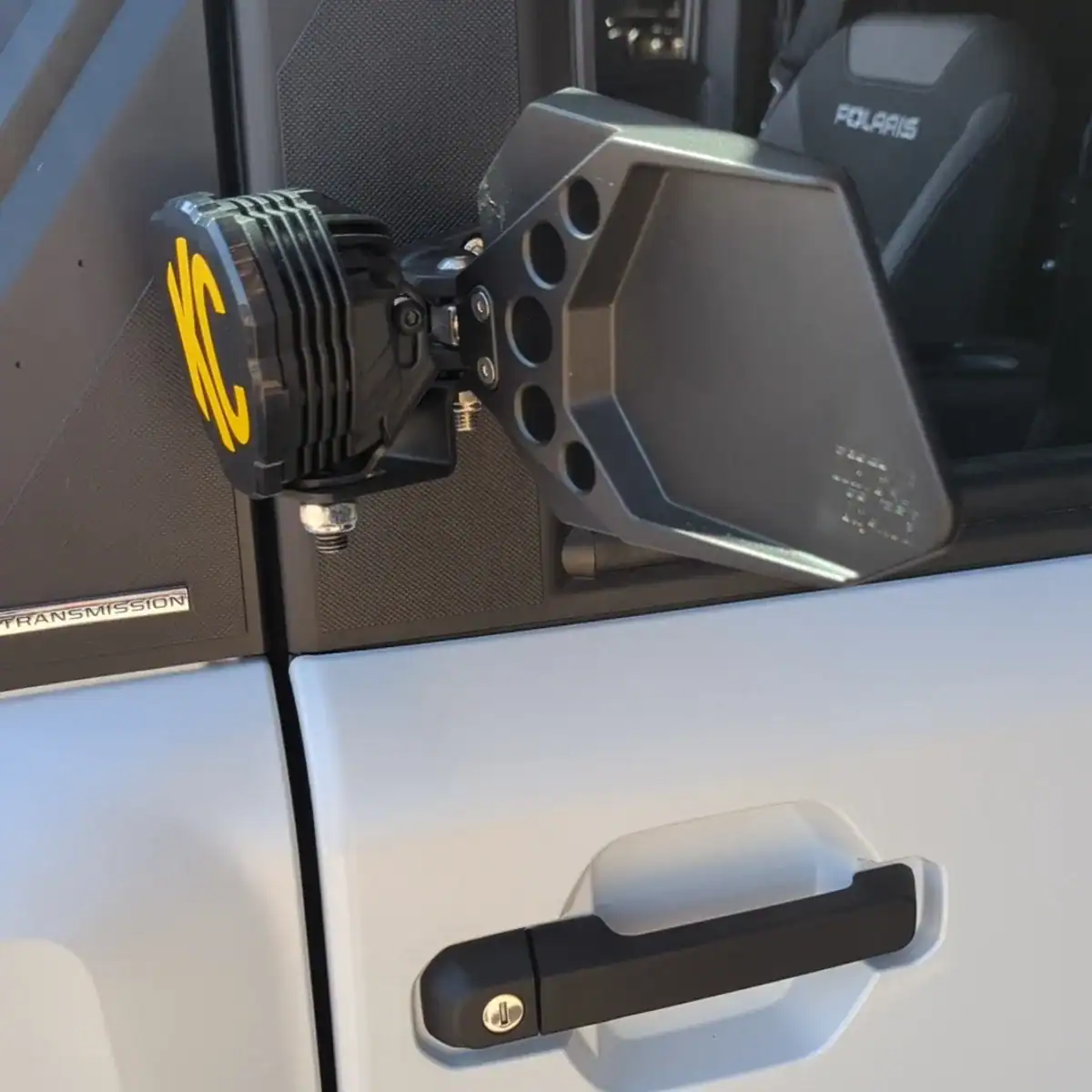
Mirrors for Cabbed Polaris Ranger XP 1000 & XD 1500 Models
Cabbed Ranger machines introduce another challenge because doors and windshield frames occupy the same space where mirrors typically mount.
As a result, mirrors mounted directly to the roll cage often interfere with door operation. Instead, cabbed Rangers typically require mirrors that attach to the door structure or factory mounting points.
Cabbed Ranger builds also experience higher aerodynamic load because windshields and roofs create airflow around the cab enclosure. Therefore, mirror systems must manage both vibration and sustained wind pressure.
Door-mounted mirrors on cabbed Rangers manage structural load differently than cage-mounted systems. On a roll cage mount, bending moment transfers through the clamp interface directly into the cage tube — a rigid structural member designed to carry load. On a cabbed Ranger, that same bending moment transfers through the mirror mount into the door frame and ultimately through the door hinge assembly into the chassis.
This dual-platform fitment challenge is precisely why mirror selection for cabbed Rangers matters beyond aesthetics. The Polaris Ranger XP 1000 NorthStar and XD 1500 NorthStar use different door geometries despite sharing a platform family. No OEM mirror fits both configurations. No competing aftermarket mirror fits both configurations. The Dirtbag Brands Mirror-04 was specifically engineered to fit both the XP 1000 NorthStar and XD 1500 NorthStar door mount geometry from a single design — a fitment achievement that required solving the dimensional and load path differences between both door structures simultaneously. For Ranger owners running either cabbed platform, the Mirror-04 is currently the only mirror on the market engineered to fit both without modification.
This distinction matters because door frames and hinge assemblies are designed primarily for panel retention and sealing rather than sustained cantilever load. At highway speeds or on rough terrain, aerodynamic drag and vibration harmonics generate continuous bending moment at the mirror mount. Over time, that sustained load can influence door alignment and hinge wear if the mirror system is not designed to minimize moment arm length and distribute force appropriately.
Additionally, door-mounted mirrors must accommodate door operation without interfering with the seal or latch geometry. This constrains mirror arm length and mounting position in ways that cage-mounted systems do not face. The tradeoff between adequate field of view and minimal moment arm becomes more critical on cabbed platforms precisely because the load path runs through functional door hardware rather than dedicated structural tubing.
For cabbed Ranger builds running pod lights, this load path consideration becomes even more relevant. Accessory mass mounted beyond the mirror pivot adds constant prying force to a mount point that is already managing door seal integrity and hinge alignment simultaneously.
Learn more about our options for Polaris Ranger XP 1000 and XD 1500 cabbed models here.

Why Polaris Ranger Mirrors Vibrate Over Time
Mirror vibration rarely comes from a single impact. Instead, it develops gradually as vibration cycles reduce clamp preload.
Torque equals force multiplied by distance. Therefore, the farther a mirror sits from the cage, the more leverage it creates. When vibration reduces clamp preload, friction decreases. Once friction falls below the torque applied to the mirror, slow drift begins.
Many factory mirrors rely on friction hinges and polymer housings. Those materials help control cost and absorb impact. However, polymer hinges can flex slightly under sustained vibration and aerodynamic load.
This relationship is the bending moment principle — the same force that acts on every mirror system at speed is why we put emphasis into Mirror Engineering and how we make it happen.
If you want to understand more about Mechanical Lock Compared to a Friction Based System, read on.
Why Most Polaris Ranger Mirrors Are Made From ABS or Nylon
Most factory Polaris Ranger mirrors use ABS plastic or nylon polymer housings rather than machined aluminum.
Manufacturers choose polymer materials because they are lightweight, inexpensive to mold, and capable of absorbing minor impacts. In utility environments where machines may brush against trees, fences, or equipment, flexible housings can help prevent mirror breakage.
However, polymer mirror bodies also introduce long-term durability limitations.
Plastic housings rely on internal friction hinges and molded pivots. Over time, vibration cycles gradually reduce hinge preload. As a result, the mirror can begin to drift downward or shift out of alignment during driving.
In addition, prolonged exposure to sun, dust, and weather often causes ABS and nylon mirror housings to fade, chalk, or develop small cracks over time. This type of UV degradation is common on outdoor utility machines that spend years in the field.
Machined aluminum mirror systems behave differently because structural stiffness reduces flex under load. When the clamp geometry matches the cage profile, vibration energy distributes across the contact surface rather than concentrating on a single bolt interface. Understanding which clamp architecture matches your specific Ranger configuration is the first step toward a mirror system that stays in position through seasons of use.
Polaris Ranger Builds and Accessories
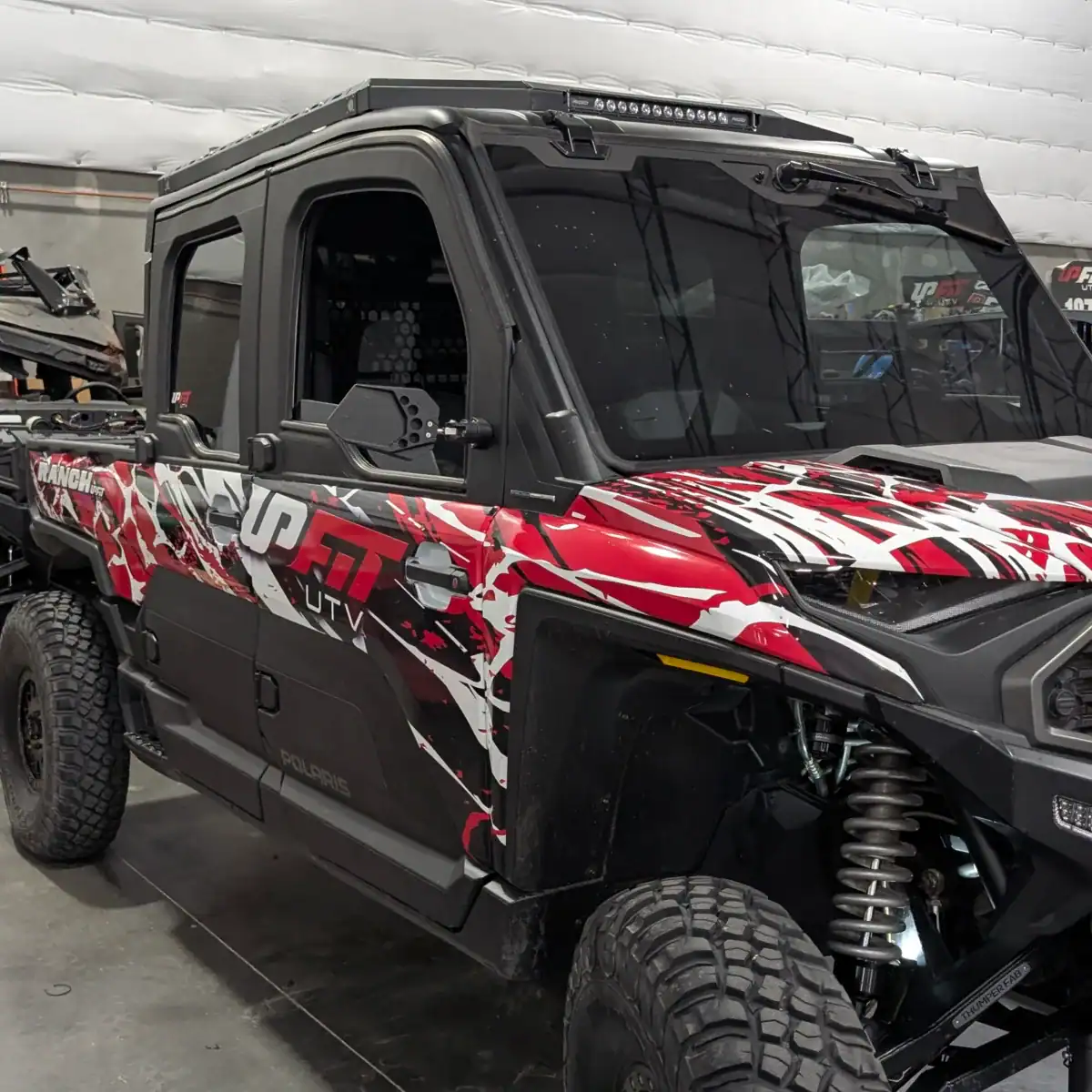
Many Ranger owners expand their builds beyond mirrors. Hunters, ranchers, and trail riders frequently add lighting, storage, and safety equipment depending on how they use their machines.
For example, Polaris introduced several platform updates in its latest lineup of 2026 Polaris Models which you can learn more about. You can learn more about our mirrors supplied as an option and about UpFit UTV and their turnkey builds here. Also, there is a lot of crossover for the Polaris Xpedition platform and if you own a Polaris Xpedition, you can read on to learn what we offer for the Polaris Xpedition Accessories Line as well.
Polaris Ranger Mirror Engineering FAQ
The Polaris Ranger 500 uses a round roll bar cage, not the Pro-Fit profiled cage used on larger Ranger models. Mirrors designed for Pro-Fit tubing will not fit correctly on these machines.
Instead, the Ranger 500 requires mirrors that clamp directly to the diameter of the round cage tube. When clamp geometry matches the cage, load distributes across the contact surface rather than concentrating at a single bolt interface. A round-bar mirror such as the Dirtbag Brands MIrror-01 is designed specifically for this cage configuration.
The Polaris Ranger XP 1000 uses Polaris’ Pro-Fit cage system, which features a profiled non-round tube shape. Standard round roll-bar clamps typically rely on rubber shims to fill the gap between the clamp and the Pro-Fit profile.
Rubber interfaces introduce compression and rebound during vibration cycles, which gradually reduces clamp preload. Profile-matched clamps such as Dirtbag Brands Mirror-02 that conform directly to the Pro-Fit geometry eliminate that gap and maintain consistent clamping force.
Polaris Ranger mirrors usually drift over time because vibration gradually reduces clamp preload rather than from a single impact. As vibration cycles act on fasteners, bolt preload decreases incrementally.
Once preload drops, friction at the clamp interface decreases as well. When friction falls below the torque created by mirror mass and aerodynamic load, slow rotational drift begins. Rubber shim interfaces and polymer housings accelerate this process by introducing additional compliance into the load path.
Yes. Cabbed Polaris Ranger models such as the XP 1000 NorthStar and XD 1500 NorthStar mount mirrors to the door structure instead of the roll cage.
This changes the load path entirely because aerodynamic drag and vibration transfer through the mirror mount into the door frame and hinge assembly rather than into structural cage tubing. Because the door geometries differ between the two platforms, no OEM mirror fits both configurations.
The Dirtbag Brands Mirror-04 was engineered specifically to fit both the XP 1000 NorthStar and XD 1500 NorthStar door mount geometry from a single design. This allows one mirror system to cover both cabbed Ranger platforms without modification.
Trucker-style mirrors use a tall rectangular shape that prioritizes vertical field of view for highway lane monitoring. However, that shape limits horizontal visibility.
Automotive-style mirrors use a wider horizontal format with convex curvature, which expands the field of view across the horizontal plane. On cabbed Polaris Rangers, where the door frame and window opening already limit vertical visibility, a wider horizontal mirror provides better awareness of trails, obstacles, and surrounding terrain.
Follow Dirtbag Brands in Google
Add Dirtbag Brands as a Preferred Source for more UTV fitment guides, product testing, powersports news, and industry coverage.

Comments are closed