
12-Pack UTV Pod Light Mount Test: Load Path, Leverage and Zero Visible Droop
Most UTV pod lights weigh only a few pounds.
Therefore, demonstrating another pod light on a mirror bracket seemed a little boring.
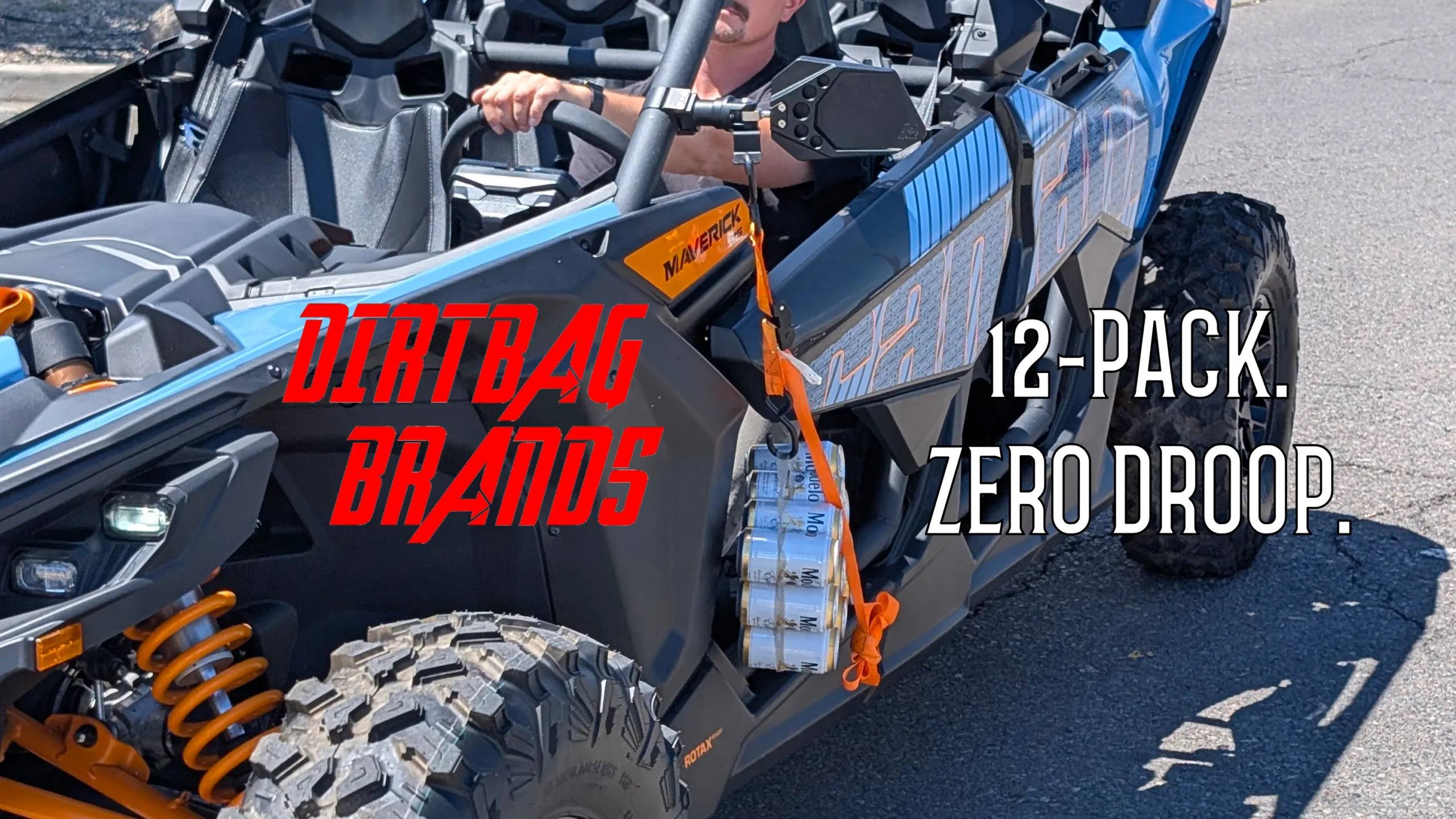
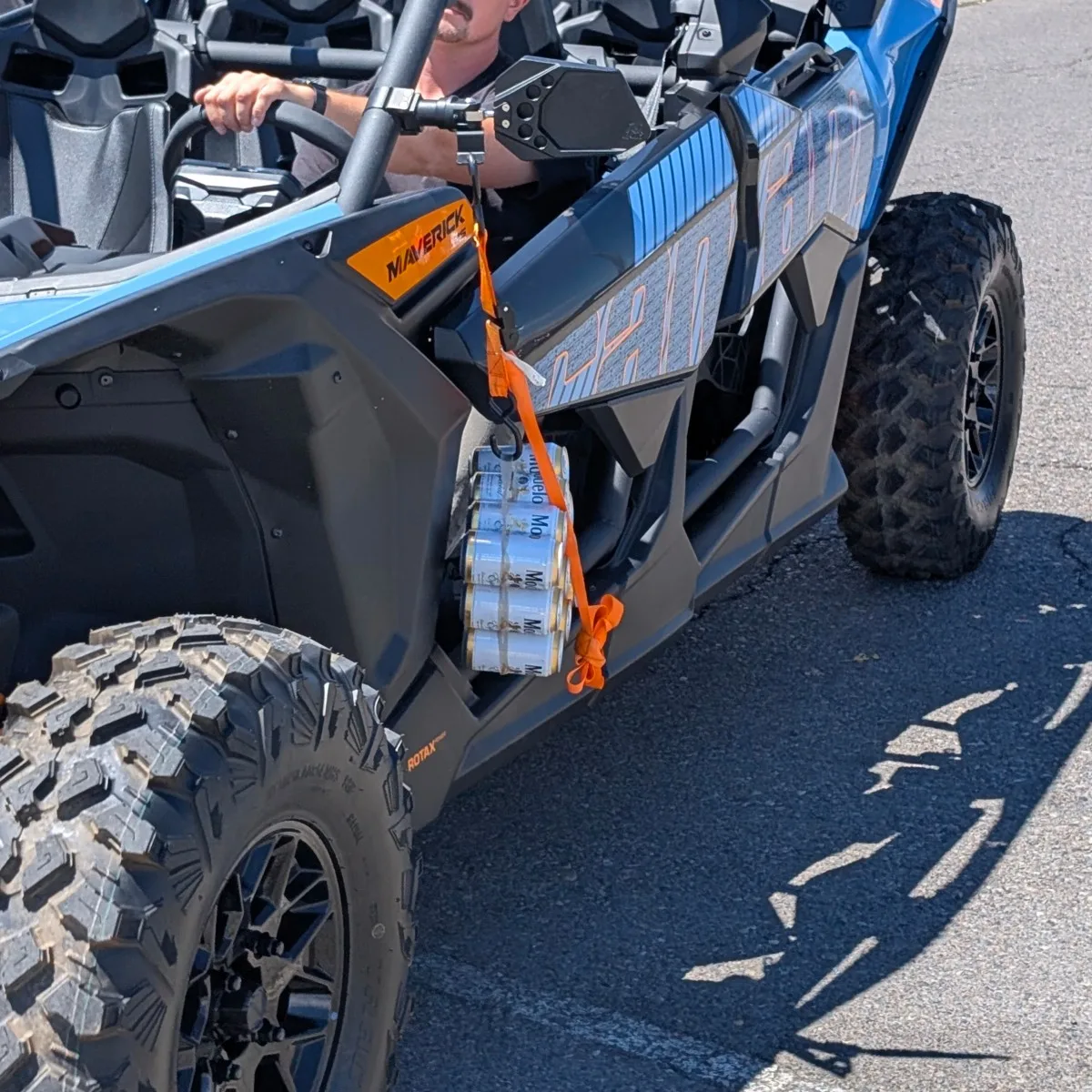
We hung a full 12-pack of beer from the IronSight Mirror-01 pod light mount instead.
Then we drove a Can-Am Maverick X3 slowly over curbs while the 12-pack swung beneath the bracket. The mirror assembly showed no visible droop or bracket rotation during the demonstration.
Was it scientific? No.
Was it memorable? Absolutely.
More importantly, the test provides a clear visual example of how leverage, load paths, bracket geometry and mechanical retention affect a UTV mirror system.
Important: This was an informal, non-instrumented demonstration. It is not a published load rating, engineering certification or recommendation to drive with cargo hanging from a mirror. Do not recreate the demonstration while operating a vehicle.

What the 12-Pack UTV Pod Light Mount Test Actually Demonstrated
The test placed significantly more weight on the pod light mounting point than a typical compact auxiliary light.
That weight was also suspended away from the cage. Therefore, it created leverage rather than simply pressing straight downward against the clamp.
During the demonstration, we observed:
- No visible downward rotation of the mirror arm
- No visible movement at the indexed pivot
- No visible rotation of the clamp around the roll cage
- No visible permanent bending of the pod light bracket
- No visible change in mirror position after the load was removed
However, the demonstration did not establish a formal weight capacity.
It did not measure fatigue life, impact resistance, bracket stress, fastener load or long-term material deformation. Those conclusions require controlled equipment, defined test conditions and repeatable measurements.
The test simply showed how the complete IronSight Mirror-01 assembly behaved beneath an unusually heavy real-world load.
Why Pod Light Placement Creates Leverage
Weight alone does not explain why UTV mirrors and light brackets move.
Distance matters too.
When a pod light sits away from the roll cage, the distance between the light and the cage creates a lever arm. As that distance increases, the rotational demand on the mirror assembly also increases.
A lightweight pod light positioned far from the cage can sometimes create more rotational force than a heavier object mounted close to the cage.
The load has to travel through every component between the light and the vehicle:
Pod light bracket → billet neck → indexed pivot → clamp → roll cage
Each interface must remain stable.
Otherwise, movement can begin at the bracket, hinge, adjustment joint or clamp.
Our broader UTV Mirror Engineering Guide explains how accessory weight, arm length, vibration and retention architecture interact throughout a mirror system. The IronSight design separates accessory load from the captured ball used for final optical adjustment.
Static Weight Is Only Part of the Problem
A pod light sitting on a parked UTV creates a mostly static load.
Once the machine begins moving, the situation changes.
The mirror assembly experiences repeated vibration from the engine, tires, suspension, terrain and chassis. Impacts introduce sudden load changes. Speed adds aerodynamic pressure. Whoops, rocks and washboard roads repeatedly change the direction and magnitude of the forces acting on the system.
Consequently, the mirror does not experience one smooth downward pull.
It experiences changing dynamic loads.
Those cycles can gradually work against fasteners, friction joints and thin brackets. A mirror may feel perfectly tight in the garage but begin moving after repeated trail use.
That is why a meaningful mirror system must manage more than static weight.
It must manage load direction, leverage, vibration and repeated movement.
Stiction, Vibration and Micro-Polishing
Stiction is static friction.
It describes the initial resistance that prevents two surfaces from moving against each other.
When a new friction-based joint is tightened, stiction can make the assembly feel extremely secure. However, off-road vibration repeatedly challenges that initial hold.
Dust and grit can enter contact surfaces. Small movements may polish those surfaces over time. Thermal changes can also affect fastener preload.
Eventually, less force may be required to begin movement.
This does not mean every ball-and-socket mirror is poorly designed. Ball-and-socket systems remain a proven way to provide easy aiming and fine adjustment.
The problem begins when one friction interface must handle every job at once.
If the same ball joint controls viewing angle, supports the mirror arm, carries accessory weight and resists vibration, it becomes the structural bottleneck.
Once the applied torque exceeds the available friction, the mirror begins to rotate.
Riders call that mirror droop.
Our article on form closure versus friction in UTV mirrors explains why mechanically indexed geometry resists rotation differently from friction-only retention.
How Mirror-01 Splits the Load Path
The IronSight Mirror-01 does not ask one adjustment ball to carry the entire system.
Instead, the architecture separates structural retention from fine optical adjustment.
The primary arm position is controlled through the boss-indexed acorn pivot. Its geometry physically resists rotation.
A controlled breakaway hinge manages impact movement. The captured high-compression ball then provides smaller adjustments for the mirror glass.
This allocation gives each component a defined role:
- The clamp secures the assembly to the cage.
- The indexed pivot establishes structural arm position.
- The hinge manages controlled breakaway movement.
- The captured ball adjusts the optic.
- The pod light bracket transfers accessory load into the structural assembly.
Because structural load does not depend solely on the adjustment ball, the mirror can maintain position while still allowing useful optical adjustment.
Mirror-01 uses a direct-bore clamp and mechanically indexed retention on 1.75-inch through 2-inch round roll bars.
Why Wide Sport UTVs Need an Extended Mirror
Modern sport UTVs present a visibility problem before the mirror ever touches the cage.
Their A-pillars are usually positioned farther inward than the rear bodywork, doors and suspension.
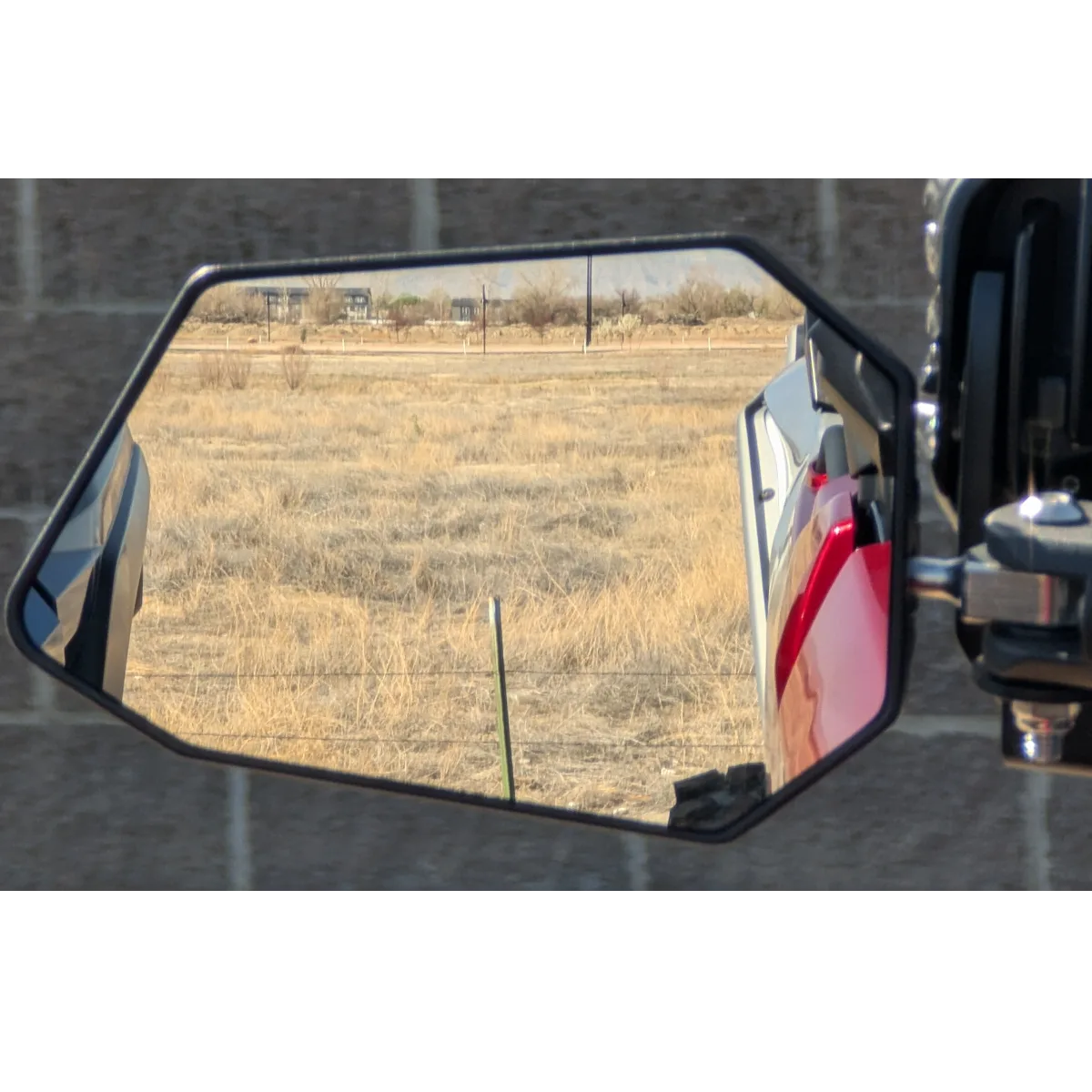
Therefore, a mirror mounted tight against the A-pillar may remain perfectly secure while showing the driver a beautiful view of the machine’s own hips.
That does not provide much useful information.
The mirror must move outward and forward enough to create a clear viewing corridor around the vehicle.
The Mirror-01 extended neck and 360-degree positioning allow the optic to move around the cage angle and wider bodywork. That positioning is especially important on machines such as:
- Polaris RZR XP, Turbo R and Pro R
- Can-Am Maverick X3 and Maverick R
- Kawasaki KRX and Teryx H2
- Honda Talon
- Yamaha Wolverine RMAX
- Segway Villain and Super Villain
Mirror-01 fits many sport and recreation UTVs using 1.75-inch through 2-inch round roll bars. Exact cage style and diameter should always be confirmed through the UTV Mirror Fitment Guide.
For platform-specific visibility geometry, see our guides to Polaris RZR accessories and side mirrors and Can-Am Maverick X3 and Maverick R accessories.
Why Pod Light Bracket Thickness Matters
A pod light bracket has to do more than hold a light in the garage.
It must resist bending while the light repeatedly moves through rough terrain.
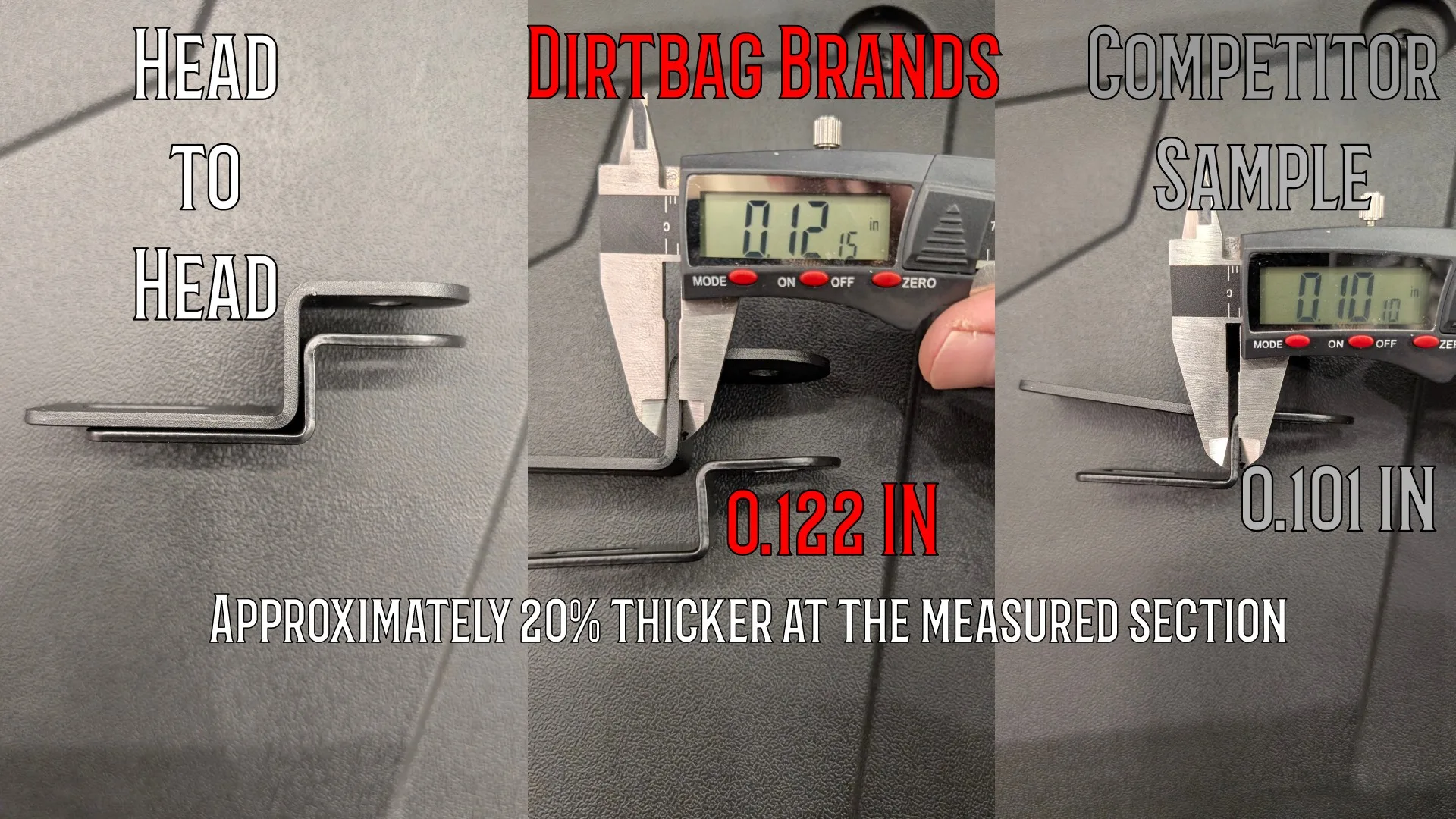
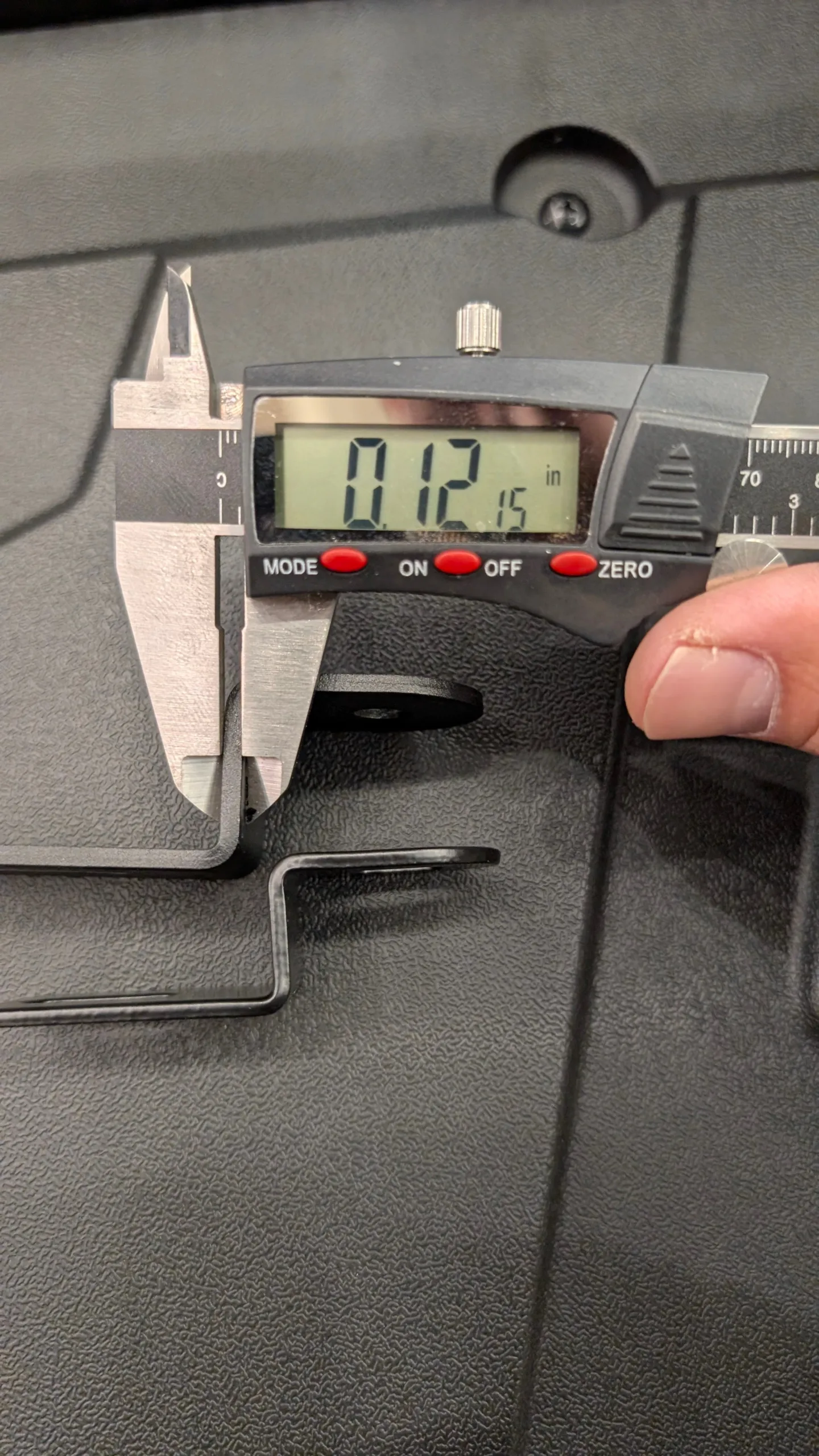
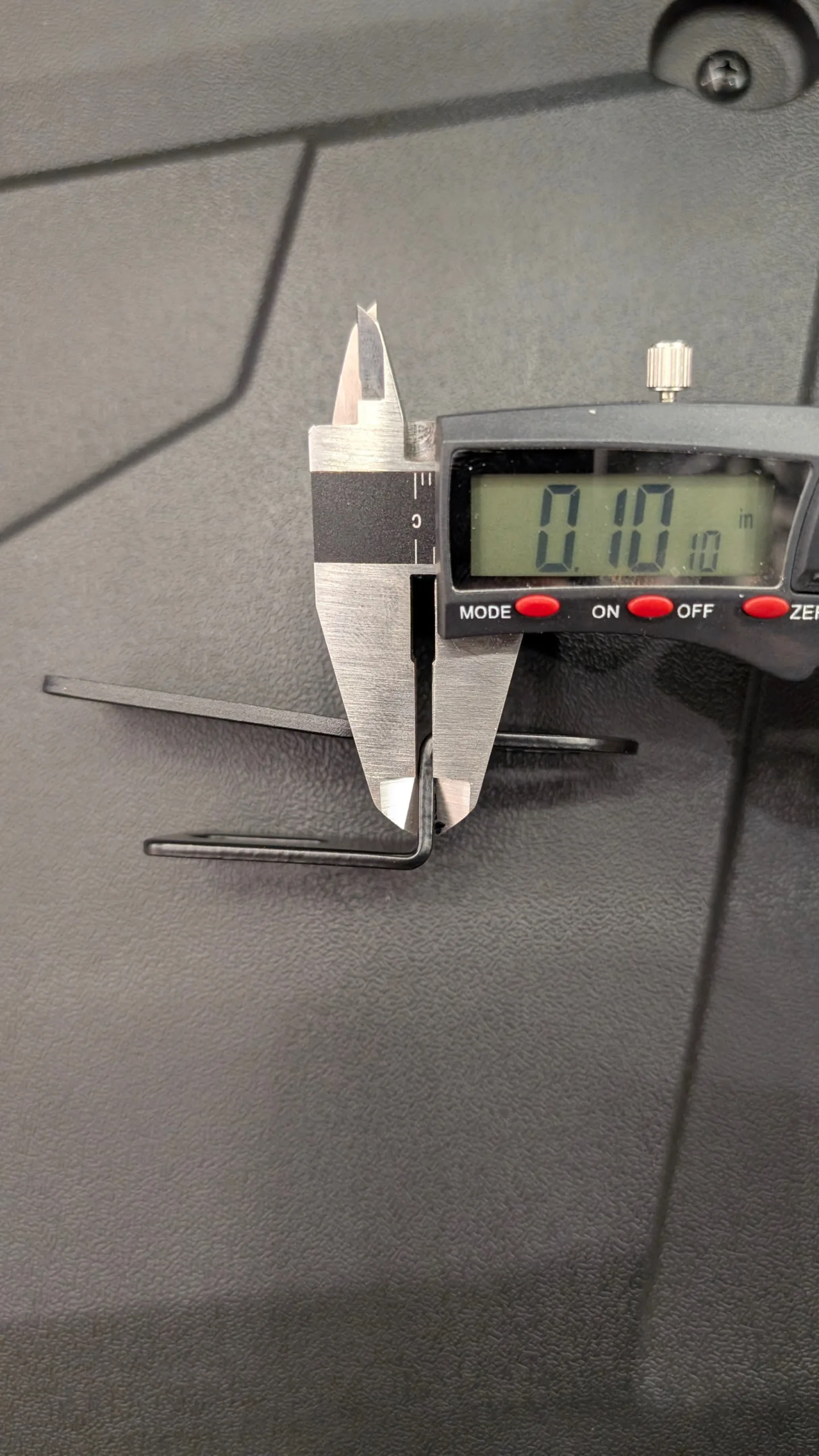
During our comparison, the Dirtbag Brands bracket measured approximately 0.122 inches at the measured section. The competitor sample measured approximately 0.101 inches.
That makes the Dirtbag Brands sample approximately 20 percent thicker at that location.
Thickness alone does not prove that one bracket is exactly 20 percent stronger.
Material properties, unsupported length, bend geometry, mounting position and load direction also influence bracket performance.
However, additional thickness can help reduce flex when materials and general construction are comparable.
Less flex can mean less visible beam movement.
That movement is often called pod light chatter. The light remains attached, but the beam bounces across the trail as the bracket vibrates.
The Dirtbag Brands pod light bracket ties directly into the mirror’s hinge and clamp structure instead of relying on a separate lightweight clamp stacked onto the cage. The mount also rotates independently from the mirror optic, allowing the light and mirror to be aimed separately.
Why Pod Light Chatter Matters
Pod light chatter is more than an annoying visual quirk.
A shaking beam makes it harder to interpret terrain.
Instead of illuminating a stable area, the beam moves across rocks, trees, trail edges and changing ground surfaces. That movement can reduce contrast and make depth more difficult to judge.
Mounting pod lights near mirror height can improve illumination toward the sides of the vehicle. It can also reduce hood glare compared with some lower mounting locations.
However, those advantages disappear when the bracket flexes excessively.
The goal is not simply keeping the light attached.
The goal is keeping the light aimed.
What Pod Lights Fit the Mirror-01 Bracket?
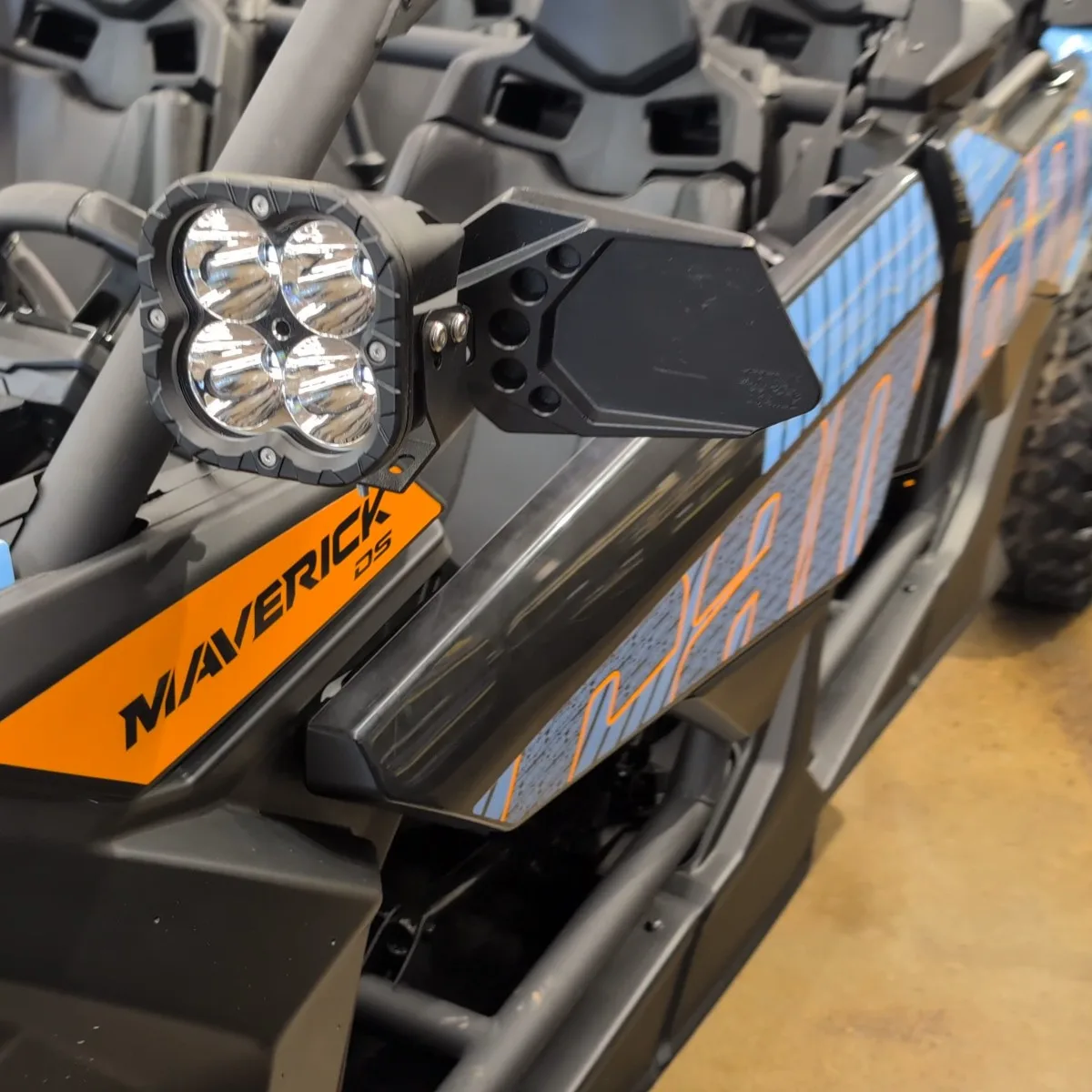
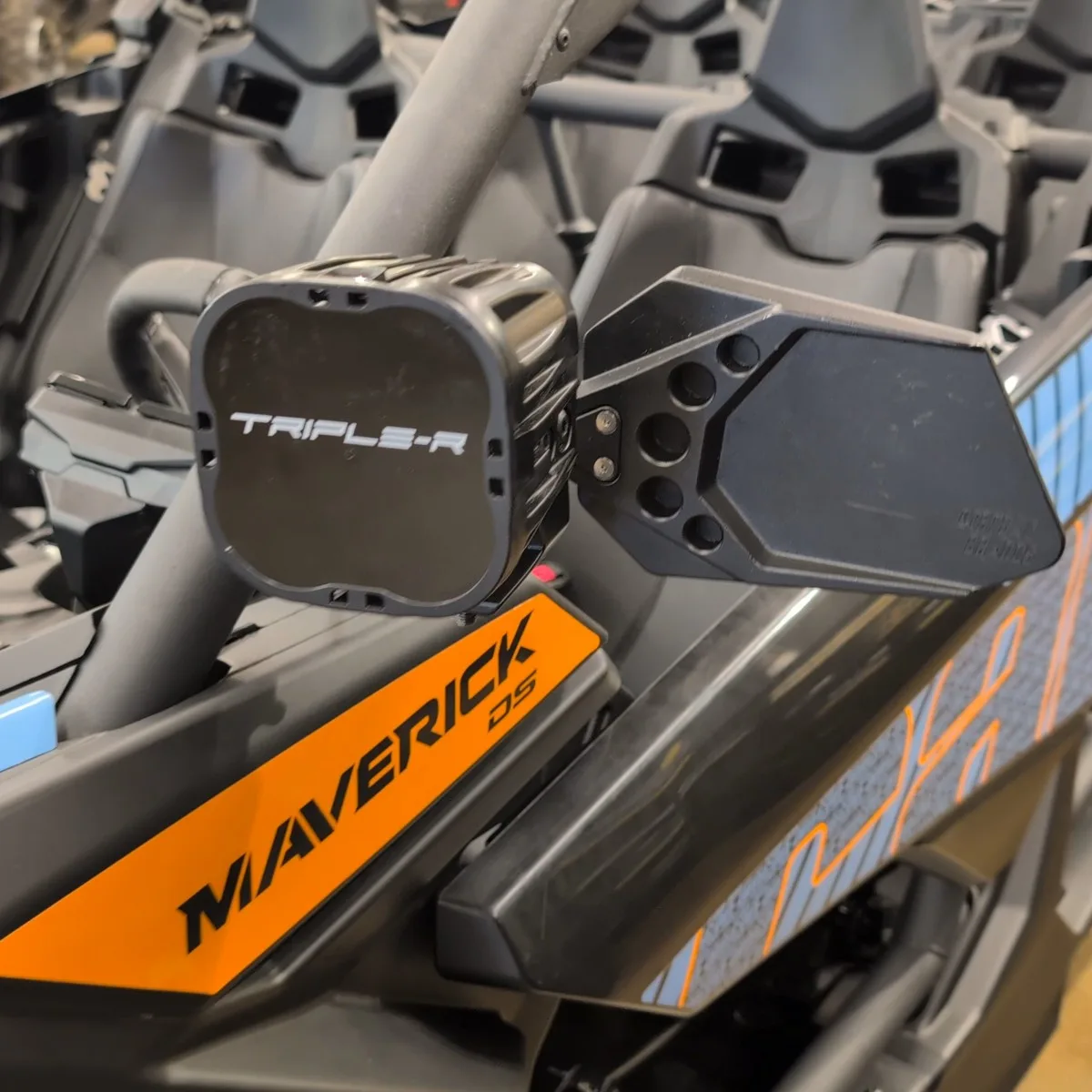
The Mirror-01 pod light platform was designed to accommodate a wide range of common auxiliary light mounting feet.
During our video, we discussed or showed examples from:
- Baja Designs
- Triple-R
- Cavalier Lighting
- Rough Country
- Common universal pod lights
We have also mounted larger five-inch pod lights on the bracket.
However, not every light uses the same mounting foot, bolt diameter or housing dimensions. Riders should confirm the light’s mounting width, hardware and clearance before installation.
The integrated mount is included with Mirror-01. It does not require a separate cage clamp or add-on bracket kit.
The Sandblast Xtreme Collaboration That Inspired the Test
The 12-pack test did not appear out of thin air.
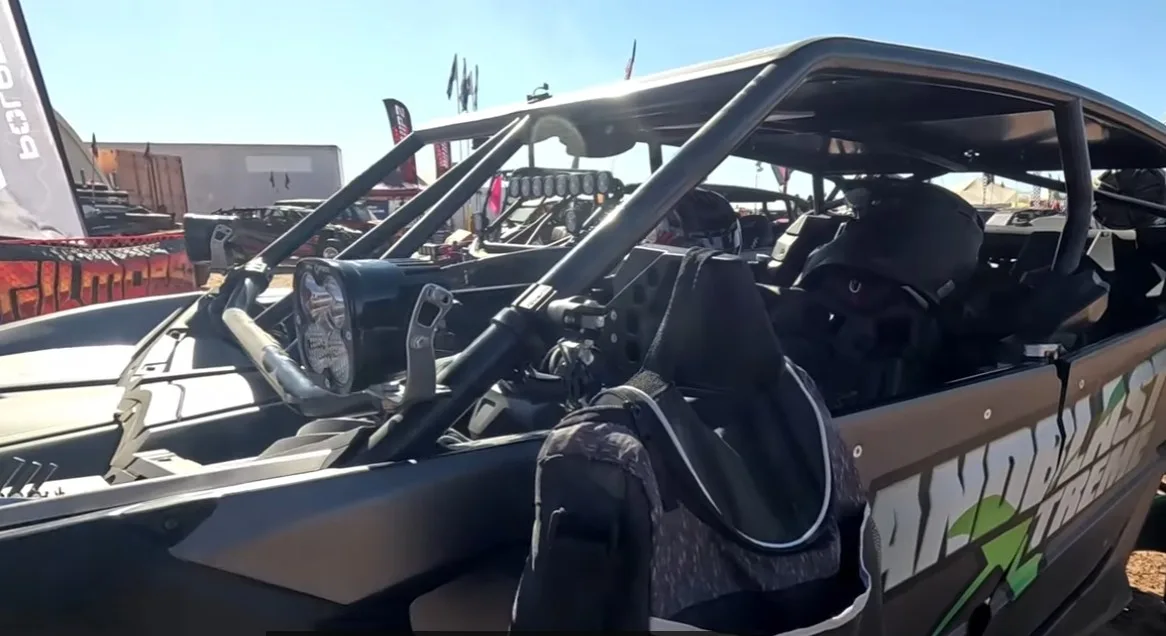
During our collaboration with Timm from Sandblast Xtreme Adventures at Camp RZR, he installed Mirror-01 on a Can-Am Maverick X3.
After the installation, Timm hung weighted gear bags from the mirror assemblies.
The weight made the machine move, yet the mirror arms did not visibly rotate downward.
That demonstration gave us a real-world look at how the indexed pivot behaved beneath sustained load. It also planted the seed for a larger and slightly more ridiculous demonstration.
Naturally, we eventually landed on beer.
Watch the original Sandblast Xtreme collaboration:

The earlier Maverick X3 demonstration is also documented in our Can-Am Maverick accessories guide.
FAQ
No. It was an informal, non-instrumented demonstration. It does not establish a certified load rating or safety limit.
A pod light adds weight away from the cage. That distance creates leverage and increases torque on the mirror assembly.
Mirror droop can result from vibration, impacts, changing dynamic loads, friction loss, grit, and repeated micro-movement.
Mirror-01 uses mechanically indexed geometry for structural retention. The captured ball handles smaller optical adjustments instead of carrying the full load.
A thicker bracket can reduce flex and visible light chatter. Material, bends, geometry, and unsupported length also affect performance.
We do not make that claim. Our bracket measured approximately 20 percent thicker than the competitor sample at the compared section.
Yes. Mirror-01 includes independent-axis pod light mounting brackets. Pod lights and their mounting hardware are sold separately.
Mirror-01 fits confirmed round roll bars from 1.75 inches through 2 inches. Always verify the exact machine and cage style.
Confirmed applications include many Polaris RZR, Can-Am Maverick, Honda Talon, Kawasaki, Yamaha, Segway, and CFMOTO models.
The bracket can accommodate several five-inch pod light designs. Fit depends on the mounting foot, bolt size, housing, and clearance.
Pod light chatter is visible beam movement caused by bracket flex or vibration while driving over rough terrain.
No. Do not drive with unsecured cargo hanging from a mirror, pod light bracket, or roll cage accessory.
Disclaimer
This video shows an informal, non-instrumented product demonstration. The 12-pack test is not a published load rating, laboratory test, engineering certification, or recommendation to hang cargo from a UTV mirror or pod-light bracket. Do not recreate this demonstration or operate any vehicle with unsecured items attached.
Alcohol was consumed only after the driving portion had ended. The person consuming alcohol was not driving. Drink responsibly and only if you are of legal drinking age. Never drink and drive.
Modelo® and all related trademarks, product names, and packaging belong to their respective owners. Dirtbag Brands is not affiliated with, sponsored by, endorsed by, or compensated by Modelo or its parent companies. The product was used solely as a recognizable demonstration weight.

Comments are closed