

Polaris Xpedition Mirrors That Don’t Vibrate or Move
If you are searching for Polaris Xpedition mirrors that actually stay in position, you are not alone. Most mirror setups either vibrate at speed or slowly drift out of alignment after a few rides. The issue is not just where the mirror mounts. It comes down to how the entire system handles load, leverage, and vibration over time.
The Polaris Xpedition ADV and XP are built for long-distance riding, enclosed cab comfort, and year-round use. That means your mirrors need to stay stable at speed, on rough terrain, and under constant vibration—not just look good in the garage.
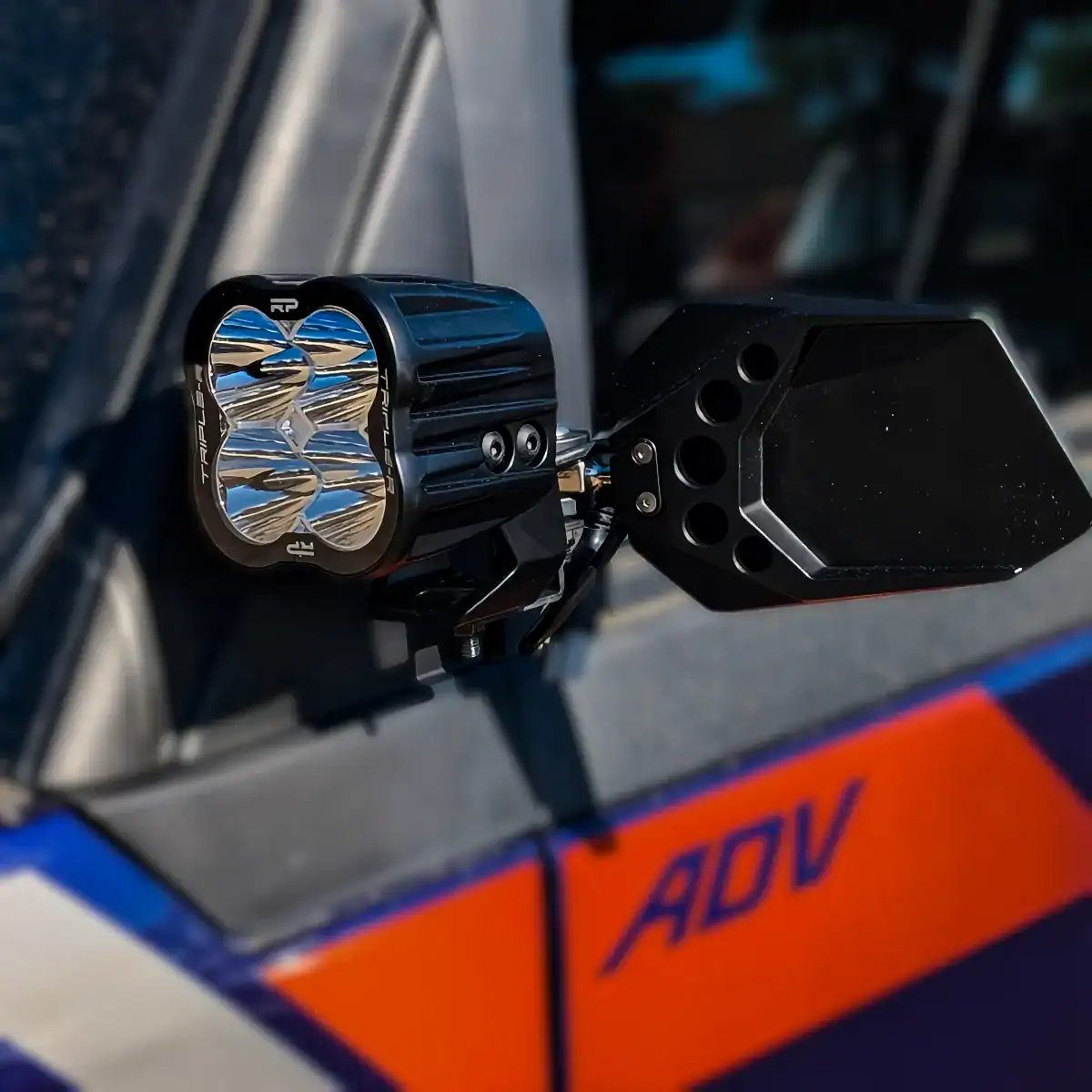
Why Most Polaris Xpedition Mirrors Move or Shake
Most aftermarket mirror systems rely on a ball-and-socket joint to handle adjustment and positioning. While that allows flexibility during install, it creates a problem over time.
All of the weight, vibration, and leverage from the mirror gets funneled into a single pivot point. That pivot relies on friction to hold position. Over time, vibration wins. The mirror starts to sag, shift, or require constant readjustment.
Mounting to a rigid surface does not fix this. If the adjustment system is the weak point, the mirror will still move.
Why Mounting Location Alone Doesn’t Solve It
Some designs focus on mounting directly to the frame. On paper, that sounds stronger. In reality, it often creates a different issue.
Frame mounting locations are not always aligned with the driver’s natural sightline. That forces the mirror to sit at an awkward angle, relying heavily on the adjustment joint to compensate.
When adjustment and load are handled by the same component, stability becomes a long-term problem.
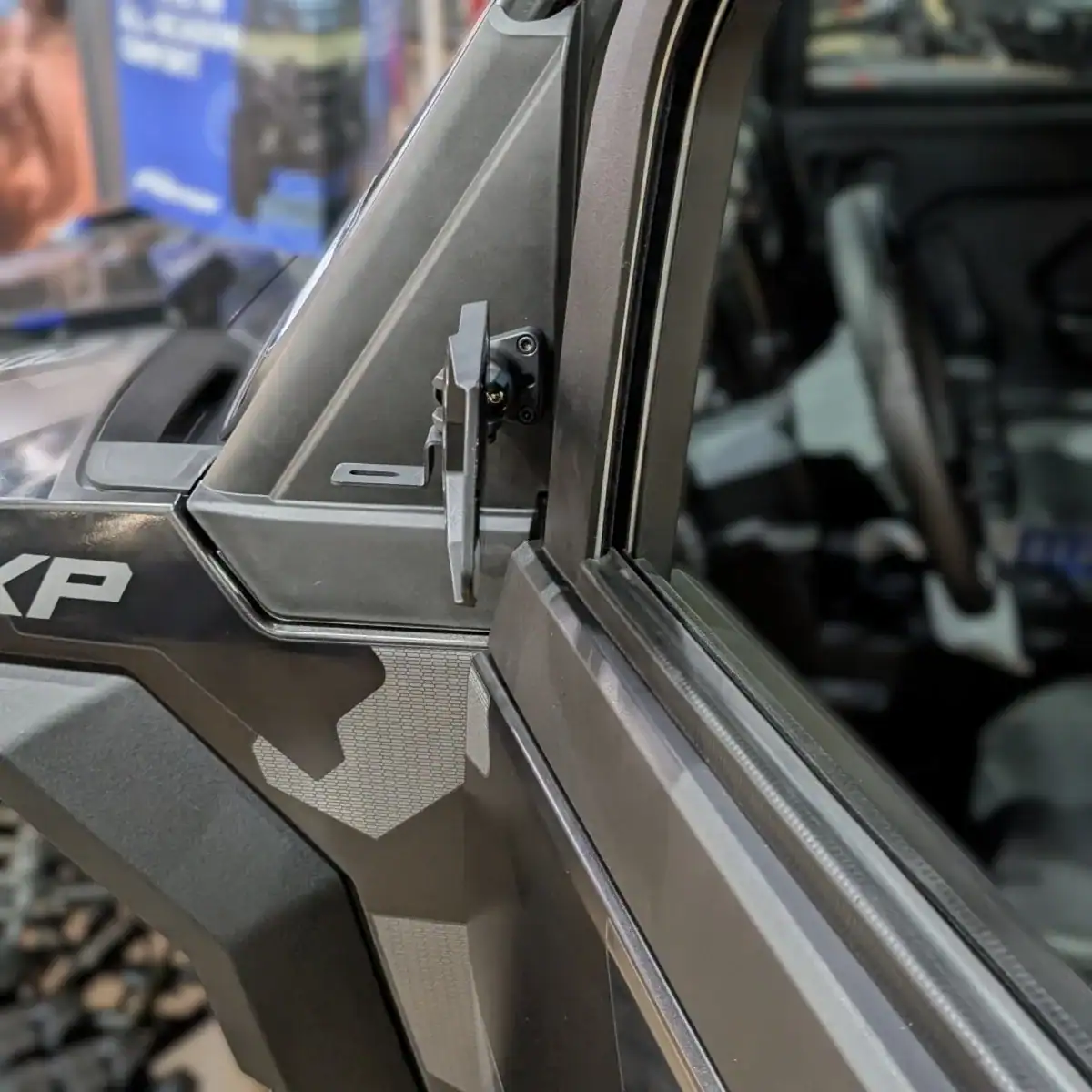
How a Controlled Mounting System Fixes the Problem

A more stable approach separates load handling from adjustment.
Instead of concentrating force at a single point, a distributed mounting system spreads load across a backing plate and supported panel. This reduces stress and limits vibration transfer.
From there, a hinge-based adjustment system controls movement along a fixed axis rather than allowing free movement in every direction. The result is a mirror that stays where you set it—even after long rides.
👉 For a deeper breakdown of how this works, see our
UTV Mirror Engineering Guide.
Why Mirror Shape Matters on the Polaris Xpedition
Not all mirrors are designed for the same purpose.
Many UTV mirrors use a tall, narrow design, originally intended for trucks and towing. That shape prioritizes vertical visibility but limits what you can see to the side.
For off-road use, a wider, automotive-style mirror provides better situational awareness. You can see more of the trail, more of your surroundings, and react faster to obstacles.
A wider field of view is more useful than simply stacking visibility vertically.
Polaris Xpedition Mirror Fitment That Actually Works
The Polaris Xpedition uses a unique mounting surface near the A-pillar and sail panel. Because of this, a properly designed mirror system must:
- align with the driver’s natural sightline
- maintain a stable mounting position under vibration
- avoid interference with doors and cab components
- provide a clear rear view without constant adjustment
👉 See full fitment for Polaris Xpedition Accessories we offer.
The Bottom Line
Mirror stability is not determined by one factor. Instead, it is the result of:
- how load is distributed
- how adjustment is controlled
- how the mirror aligns with the driver
- and how the system handles vibration over time
If any one of these is off, the mirror will move. However, if all of them work together, the mirror stays put.
👉 If you want Polaris Xpedition mirrors that stay tight, clear, and predictable on real terrain, check them out here
Explore Fitment for Other Utility UTVs
If you are comparing setups across machines, you can also explore our full fitment breakdowns for:
Each platform uses a different mounting geometry, which directly affects mirror stability, vibration control, and long-term visibility.
Polaris Xpedition Mirror FAQ
Most Polaris Xpedition mirrors vibrate or drift over time, especially when they rely on ball-and-socket joints or universal clamp systems. Vibration, leverage, and added accessory weight all contribute to movement. A properly designed system controls these forces instead of fighting them.
Mirror movement is caused by a combination of vibration, leverage, and poor load distribution. When force is concentrated at a single adjustment point, such as a ball joint, the mirror will gradually slip. Over time, this leads to constant readjustment and reduced visibility.
No, both the Polaris Xpedition ADV and XP use the same mounting area near the A-pillar and sail panel. However, because of this unique geometry, not all mirror systems fit correctly or maintain proper alignment.
A stable mirror system uses a distributed mounting design with a backing plate and controlled hinge adjustment. This setup spreads load across the mounting surface and prevents movement under vibration, instead of relying on friction alone.
Poorly designed mirrors can interfere with doors, seals, or visibility lines. A platform-specific design avoids these issues by aligning with the vehicle’s structure and maintaining proper clearance during operation.
Disclaimer
This article is intended to explain mirror design principles, mounting behavior, and fitment considerations for the Polaris Xpedition platform. Product comparisons are based on general design characteristics and real-world usage observations. Individual results may vary depending on installation, riding conditions, and vehicle configuration.
Follow Dirtbag Brands in Google
Add Dirtbag Brands as a Preferred Source for more UTV fitment guides, product testing, powersports news, and industry coverage.

Comments are closed